

Copiague
Copiague is a South Shore community where Montauk Highway and Sunrise Highway carry heavy east-west traffic through commercial and residential corridors that have been the site of fatal pedestrian strikes and high-speed collisions. The Southern State Parkway passes along the hamlet's northern boundary, adding interchange traffic to already-congested local roads. Alonso Krangle LLP represents Copiague car accident victims, pursuing full compensation for injuries caused by negligence on these dangerous roads.

Collision Risks on Copiague Roads
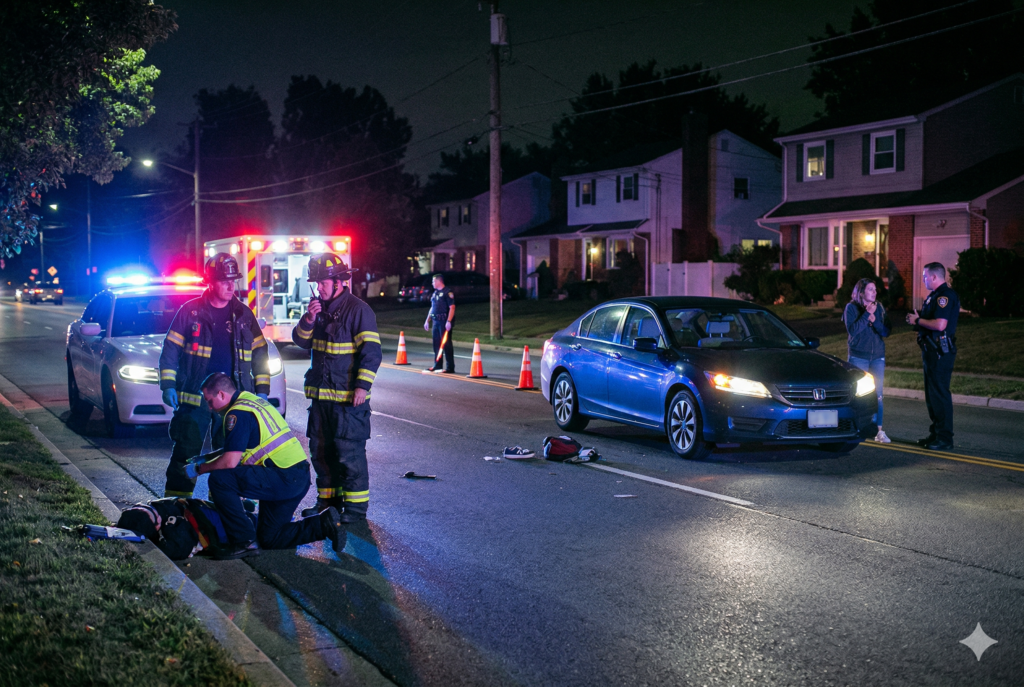
Copiague is a hamlet within the Town of Babylon in Suffolk County, located on Long Island's South Shore between Lindenhurst to the east and Amityville to the west. Montauk Highway (Route 27A) runs through the community's commercial core, and Sunrise Highway (Route 27) passes through its northern section as a high-volume divided arterial. Great Neck Road runs north-south through the hamlet, connecting Sunrise Highway to Montauk Highway and the South Shore waterfront. The Southern State Parkway passes near Copiague's northern boundary. Montauk Highway through Copiague has been a persistent site of pedestrian fatalities. In 2025, a 69-year-old pedestrian was killed on Montauk Highway in Copiague — one of multiple pedestrian deaths along this corridor that the Suffolk County District Attorney described as part of a disturbingly common pattern. The wide, high-speed road offers limited safe crossing opportunities for pedestrians, with insufficient crosswalks and poor lighting in certain stretches. Sunrise Highway through the area carries approximately 85,000 vehicles per day regionally, with frequent rear-end crashes at congested signals. The intersection of Sunrise Highway and Great Neck Road sees a mix of commuter and local traffic that creates conflict points. Suffolk County recorded 164 traffic deaths in 2022, the highest of any county in New York State. Traffic fatalities rose approximately 40% since 2019. One in three fatal crashes involve speeding, and one in three involve alcohol. Nassau and Suffolk counties combined average 83 fatal or injury-causing accidents per day.
Local Context: Montauk Highway through Copiague has been the site of fatal pedestrian strikes that the Suffolk County District Attorney described as an ongoing crisis. A 69-year-old pedestrian was killed on this corridor in 2025. The wide, high-speed road provides limited safe crossing infrastructure for pedestrians. Sunrise Highway carries approximately 85,000 vehicles per day across the region, producing frequent and severe rear-end and intersection crashes.
Your No-Fault Benefits Explained
Under Insurance Law § 5102(a), all New York vehicles carry PIP coverage. After a crash, your insurer pays up to $50,000: medical treatment within one year, lost wages at $2,000/month for three years, and miscellaneous expenses at $25/day for one year. File the NF-2 within 30 days under Insurance Law § 5103. PIP pays nothing for pain and suffering. Recovering those damages requires meeting the serious injury threshold under Insurance Law § 5102(d) and pursuing a separate claim against the at-fault driver.Proving a Serious Injury in New York
Insurance Law § 5102(d) defines nine qualifying categories: death; dismemberment; significant disfigurement; fracture; loss of a fetus; permanent loss of use; permanent consequential limitation; significant limitation; and a medically determined injury preventing substantially all customary activities for 90 of 180 days. Fractures auto-qualify. The "limitation" categories require MRI/CT imaging, range-of-motion testing, and expert opinions. Thorough documentation from day one protects your claim.
Injuries Resulting from Copiague Crashes
Copiague's collision dynamics — Montauk Highway pedestrian strikes, Sunrise Highway rear-end crashes, intersection T-bone impacts, and Southern State Parkway high-speed collisions — produce serious injuries.Traumatic Brain Injuries
Pedestrians struck on Montauk Highway and vehicle occupants in high-speed Sunrise Highway crashes face TBI risk. Brain injuries range from concussions to severe TBIs causing permanent cognitive impairment. Early neuroimaging is essential.Fractures and Broken Bones
Broadside crashes at intersections and pedestrian strikes produce severe fractures. Pedestrians sustain leg, pelvis, and skull fractures. Any fracture auto-qualifies as a serious injury.Herniated and Bulging Discs
Rear-end crashes on Sunrise Highway compress spinal discs, causing herniations that produce chronic pain, sciatica, and weakness. Properly documented disc injuries with functional limitations frequently meet the threshold.Spinal Cord Injuries and Paralysis
Catastrophic crashes on Sunrise Highway or the Southern State Parkway can cause permanent spinal cord damage. Lifetime damages routinely reach millions of dollars.Internal Organ Damage
Blunt force from seatbelt compression and vehicle intrusion can rupture internal organs. Same-day evaluation is critical.Whiplash and Cervical Injuries
Rear-end crashes damage cervical structures. Chronic whiplash causes lasting pain, headaches, and limited range of motion.Knee, Shoulder, and Joint Injuries
Impact forces tear ligaments and damage cartilage. Surgery and months of rehabilitation produce substantial costs and lost income.PTSD and Psychological Injuries
Surviving or witnessing a violent crash can cause PTSD, driving phobia, anxiety, and depression. New York courts recognize these as compensable injuries.
Identifying Liable Parties
The at-fault driver. A driver who strikes a pedestrian on Montauk Highway, rear-ends you on Sunrise Highway, runs a red light at Great Neck Road, or drives distracted can be held liable. Police reports, surveillance footage, and cell phone records establish negligence. An employer. When an employee causes a crash during work duties, the employer may be vicariously liable with commercial insurance of $1 million or more. Vehicle manufacturers. Defective components give rise to strict product liability claims. Government entities. The Town of Babylon maintains local roads. NYSDOT maintains Montauk Highway, Sunrise Highway, and the Southern State Parkway. Suffolk County maintains county roads. When dangerous conditions — missing crosswalks on Montauk Highway, poor lighting, broken signals — contribute to crashes, the responsible entity may share liability. Government claims require a Notice of Claim within 90 days under GML § 50-e and suit within one year and 90 days under GML § 50-i. Alcohol vendors. Under ABC Law § 65, bars serving visibly intoxicated patrons who cause crashes can be held liable. Vehicle owners. The permissive use doctrine holds owners liable for accidents caused by permitted drivers.Injured in a Car Accident in Copiague?
Alonso Krangle LLP represents Copiague accident victims throughout Suffolk County. Free consultations — no fees unless we recover for you. Call 800-403-6191 for Your Free Case Review
Crash Patterns and Comparative Negligence
Pedestrian strikes on Montauk Highway — where wide lanes, limited crosswalks, and poor lighting create deadly conditions — are Copiague's most devastating crash type. Rear-end collisions on Sunrise Highway result from sudden speed changes in congested traffic. T-bone crashes at Great Neck Road intersections involve red-light violations and failure-to-yield scenarios. Sideswipe crashes on the Southern State Parkway occur at interchange areas. Under CPLR § 1411, pure comparative negligence reduces recovery by your fault percentage but never eliminates it. If damages total $460,000 and you are found 30% at fault, recovery would be $322,000.What to Do After an Accident in Copiague
- Call 911. Suffolk County Police respond. A police report is foundational evidence.
- Get emergency medical care immediately. Same-day records link injuries to the crash.
- Photograph the scene. Vehicle damage, road conditions, traffic controls, and injuries. On Montauk Highway, photograph the absence of crosswalks or lighting if applicable.
- File the NF-2 within 30 days. Absolute deadline for PIP benefits.
- Refuse recorded statements from the opposing insurer. No obligation.
- Consult an attorney before accepting any settlement. Early offers undervalue your case.
Damages Available to Accident Victims
Economic damages: Medical costs beyond PIP, lost wages, diminished earning capacity, property damage. Non-economic damages: Pain and suffering, emotional distress, loss of enjoyment of life, disfigurement, loss of consortium. No cap in New York. Punitive damages: Extreme cases — severe intoxication, racing, deliberate recklessness. In wrongful death cases, EPTL § 5-4.1 permits recovery of funeral costs, lost support, and loss of companionship. UM/UIM supplements recovery when the at-fault driver's insurance is insufficient.How Insurance Companies Undervalue Claims
Quick lowball settlements. Designed to close claims before injuries are fully diagnosed. Recorded statements as leverage. Everything becomes ammunition. Medical history fishing. Broad authorizations let insurers blame pre-existing conditions. Treatment gap attacks. Missing appointments undermines your claim. Defense medical examiners. Insurance-hired doctors minimize injuries.
Key Fact: Accident victims with legal representation consistently recover substantially higher compensation. In pedestrian fatality cases and claims involving government road negligence, experienced counsel is critical for navigating the complex procedural requirements and maximizing recovery.
Filing Deadlines in New York
| Action | Deadline | Authority |
|---|---|---|
| Notify insurer / file NF-2 | 30 days | Ins. Law § 5103 |
| Personal injury lawsuit | 3 years | CPLR § 214 |
| Wrongful death lawsuit | 2 years | EPTL § 5-4.1 |
| Notice of Claim (government entity) | 90 days | GML § 50-e |
| Lawsuit against government entity | 1 year + 90 days | GML § 50-i |
| UM/UIM claim | 6 years (contract) | CPLR § 213 |
Government Entity Deadline
If your crash involved a Town of Babylon vehicle, Suffolk County equipment, or a hazardous condition on Montauk Highway or Sunrise Highway maintained by NYSDOT — including missing crosswalks, inadequate pedestrian signals, or poor lighting, you must file a Notice of Claim within 90 days. Missing this deadline almost always permanently bars your claim.Frequently Asked Questions
A pedestrian was struck on Montauk Highway in Copiague — what legal options exist?
Pedestrians can pursue all damages — medical bills, lost wages, pain and suffering — without meeting the serious injury threshold. The driver bears primary liability. If inadequate crosswalks, missing pedestrian signals, or poor lighting contributed, the government entity maintaining the road — NYSDOT for Montauk Highway, the Town of Babylon for local streets — may share liability. The Suffolk County DA has described pedestrian deaths on Montauk Highway as a disturbingly common pattern, which may help establish that authorities knew about the danger. Government claims require a 90-day Notice of Claim.
What is the serious injury threshold?
Nine categories under Insurance Law § 5102(d). Fractures auto-qualify. Other injuries need objective medical documentation of significant or permanent limitation.
What deadlines apply?
NF-2: 30 days. Personal injury: 3 years. Wrongful death: 2 years. Government claims: 90-day Notice, lawsuit within 1 year + 90 days.
Can I recover if partially at fault?
Yes. Pure comparative negligence under CPLR § 1411 reduces but never eliminates recovery.
What does Alonso Krangle LLP charge?
Nothing upfront. Contingency fee — you pay only if we win. Free initial consultation.
What if the at-fault driver was drunk?
Drunk driving supports compensatory and potentially punitive damages. Under the Dram Shop Act (ABC Law § 65), the bar that served the driver may also be liable.
What if the driver who hit me was working?
The employer may be vicariously liable with commercial insurance of $1 million or more. This applies to all employees driving for work purposes.
What if the other driver fled the scene?
File under your own uninsured motorist (UM) coverage. Report to police within 24 hours and MVAIC within 90 days. UM coverage is required on all New York policies.
My no-fault benefits ran out — what now?
Once PIP's $50,000 cap is reached, health insurance may cover ongoing treatment. Many providers treat accident patients on a lien basis — waiting for payment until the case resolves. Your lawsuit against the at-fault driver recovers all medical expenses beyond PIP.
Related Resources
Speak with An Attorney
Submit This Form or Call 800-403-6191