

Farmingdale
Farmingdale lies at the intersection of Route 109, Conklin Street, and Broadhollow Road — corridors that carry commuter, commercial, and industrial traffic through one of Long Island's most densely developed areas. The village's compact commercial center, proximity to major highways, and industrial zones along the Republic Airport corridor create persistent collision risks. Alonso Krangle LLP represents Farmingdale car accident victims, pursuing full compensation through skilled negotiation and aggressive litigation when necessary.
Traffic Risks on Farmingdale Roads
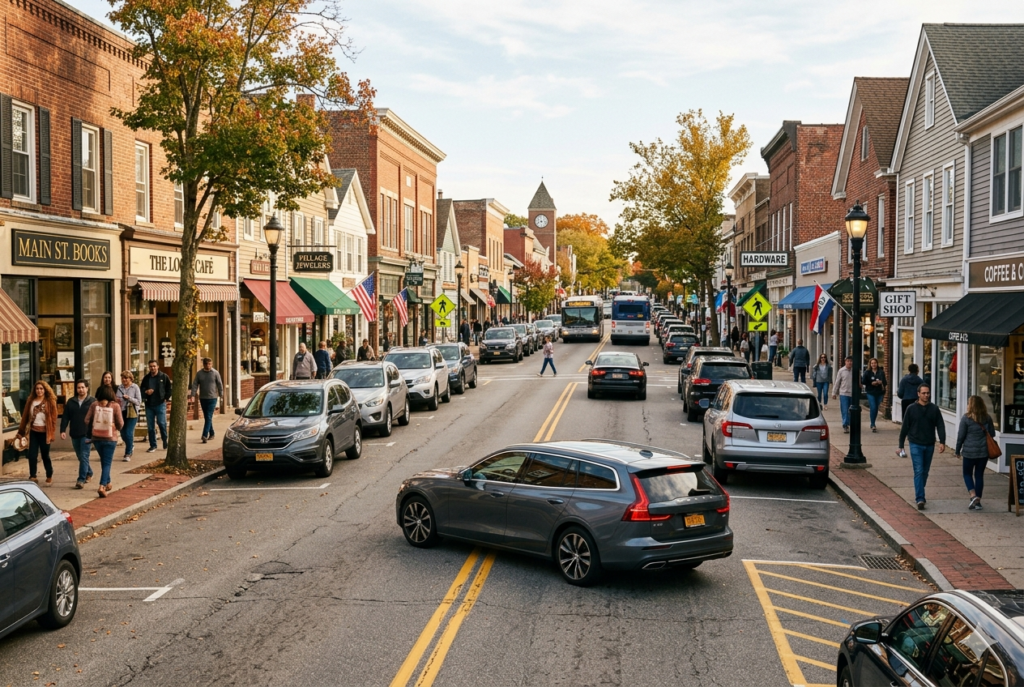
Farmingdale is an incorporated village within the Town of Oyster Bay in Nassau County. Route 109 (Farmingdale Road/Fulton Street) runs north-south through the village, connecting the Southern State Parkway to the south with the commercial areas along Conklin Street and Main Street. Broadhollow Road (Route 110) passes just east of the village, channeling heavy traffic between the LIE and Melville's corporate corridors. The village sits near the intersection of the Nassau-Suffolk county line, with Republic Airport immediately to the east generating additional commercial and aviation-related traffic on surrounding roads. Conklin Street through downtown Farmingdale is the village's commercial spine, where pedestrians, parked cars, delivery vehicles, and through-traffic share a narrow roadway. Left turns into shops and restaurants create frequent conflict points, and rear-end collisions are common when traffic stops suddenly for turning vehicles. Route 109 carries heavier and faster traffic, with the Southern State Parkway interchange producing the same merge-zone hazards seen throughout Long Island's parkway system. The intersection of Route 109 and Main Street sees a complex mix of local and through traffic, while Hempstead Turnpike to the south adds another high-volume, high-crash road within easy reach of Farmingdale residents. Long Island recorded 254 traffic deaths in 2022 — 81 in Nassau County and 164 in Suffolk County — the highest combined total in decades. Traffic fatalities across the region increased approximately 40% since 2019. Nassau and Suffolk counties together average 83 fatal or injury-causing accidents per day. One in three fatal crashes involve speeding, and one in three involve alcohol. These statistics underscore the importance of understanding your legal rights after any serious accident in Farmingdale.
Local Context: Farmingdale sits at the Nassau-Suffolk border where Route 109, Route 110 (Broadhollow Road), and the Southern State Parkway converge. Conklin Street's compact commercial corridor funnels traffic through a narrow space shared with pedestrians, parked vehicles, and delivery trucks. The village's proximity to Republic Airport generates additional truck and commercial vehicle traffic on surrounding roads.
How No-Fault Benefits Work in New York
Under Insurance Law § 5102(a), New York requires every registered vehicle to carry Personal Injury Protection (PIP) coverage. After a car accident, your own auto insurer pays your PIP benefits regardless of who caused the crash — providing a baseline of immediate financial support. PIP provides up to $50,000 in total benefits: medical expenses for treatment obtained within one year of the accident, lost wages capped at $2,000 per month for a maximum of three years, and incidental expenses at $25 per day for up to one year. You must submit the NF-2 application to your insurer within 30 days of the accident under Insurance Law § 5103. Late filing results in forfeiture of benefits. PIP does not compensate for pain and suffering, emotional distress, or any other non-economic loss. A person who suffers a torn rotator cuff in a crash on Conklin Street receives PIP coverage for their surgery and therapy, but nothing for the months of shoulder pain, the inability to lift their child, or the recreation activities they can no longer enjoy. To recover those losses, you must demonstrate that your injury meets the serious injury threshold and pursue a separate claim against the at-fault driver.The Serious Injury Threshold You Must Meet
Insurance Law § 5102(d) lists nine categories of "serious injury" that unlock the right to sue for pain and suffering. Without meeting at least one, your recovery is limited to no-fault PIP benefits. The categories include: death; dismemberment; significant disfigurement; fracture; loss of a fetus; permanent loss of use of a body organ, member, function, or system; permanent consequential limitation of use of a body organ or member; significant limitation of use of a body function or system; and a medically determined injury preventing substantially all of the person's usual daily activities for at least 90 days during the first 180 days after the accident. Fractures automatically qualify. For soft tissue injuries, the battle is over documentation. A herniated disc confirmed by MRI must be accompanied by quantified range-of-motion deficits, neurological testing results, and medical expert opinions establishing the injury's permanent or significant character. Insurance companies deploy defense medical examiners to challenge these claims. Your medical evidence from the first day of treatment is the foundation that determines whether your threshold claim succeeds or fails.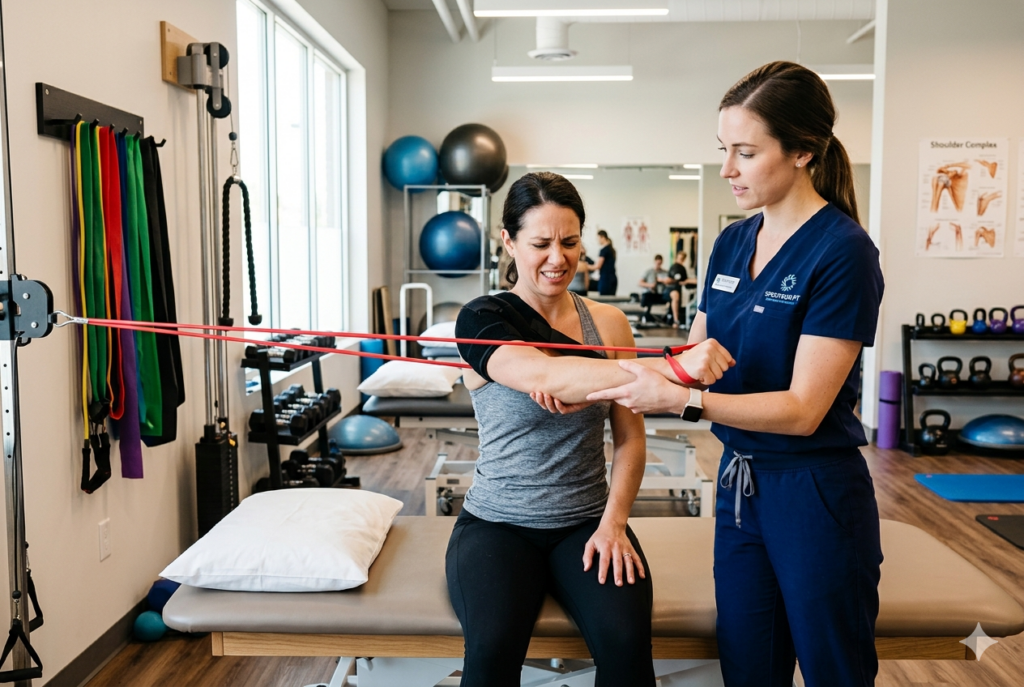
Injuries from Farmingdale Car Accidents
Farmingdale's intersection crashes, rear-end collisions on Route 109, and pedestrian accidents on Conklin Street produce injuries that range from painful but recoverable to permanently life-altering.Traumatic Brain Injuries
Head trauma in car accidents ranges from mild concussions producing temporary cognitive symptoms to severe TBIs causing permanent impairment. Even a "minor" concussion can affect memory, concentration, and mood for months. Pedestrians struck by vehicles on Farmingdale's streets are especially vulnerable to head injuries because they have no protective vehicle structure. Early neuroimaging and neuropsychological evaluation are essential for both treatment and legal documentation.Herniated and Bulging Discs
The sudden deceleration forces in rear-end crashes — common on Route 109 and at Conklin Street signals — compress vertebral discs, forcing them to rupture or bulge against spinal nerves. This produces chronic pain, radiating symptoms in the arms or legs, and reduced mobility. Properly documented herniated discs with measurable functional limitations frequently satisfy the "significant limitation" threshold category.Fractures and Broken Bones
T-bone crashes at Farmingdale intersections produce hip, pelvic, and rib fractures. Wrist and forearm fractures result from bracing against the dashboard. Complex fractures may require surgical fixation with hardware and extended rehabilitation. Every fracture automatically meets the serious injury threshold, simplifying the legal pathway to pain and suffering recovery.Whiplash and Cervical Injuries
Stop-and-go traffic on Conklin Street and Route 109 makes rear-end collisions a regular occurrence, and whiplash is the most common resulting injury. The rapid snapping of the head damages cervical muscles, ligaments, and discs. Chronic whiplash can produce persistent neck pain, headaches, dizziness, and limited range of motion that affects every aspect of daily life.Torn Ligaments and Soft Tissue Injuries
ACL tears, meniscus damage in the knee, rotator cuff injuries in the shoulder, and labral tears in the hip result from the sudden twisting forces of a crash. These injuries often require arthroscopic surgery and months of physical therapy. The extended recovery generates substantial medical bills and prolonged work absences.Internal Organ Damage
Blunt force from seatbelt compression, steering wheel contact, or side-panel intrusion can damage internal organs — ruptured spleens, liver lacerations, kidney contusions, and collapsed lungs. These injuries may not show external signs and can become life-threatening without prompt diagnosis. Emergency medical evaluation after any significant collision is essential.Spinal Cord Injuries and Paralysis
High-energy collisions on the Southern State Parkway or Route 109 can cause spinal cord damage resulting in partial or complete paralysis. These catastrophic injuries require emergency surgery, extended hospitalization, and lifelong medical care. The economic and non-economic damages in spinal cord cases typically extend well into the millions of dollars.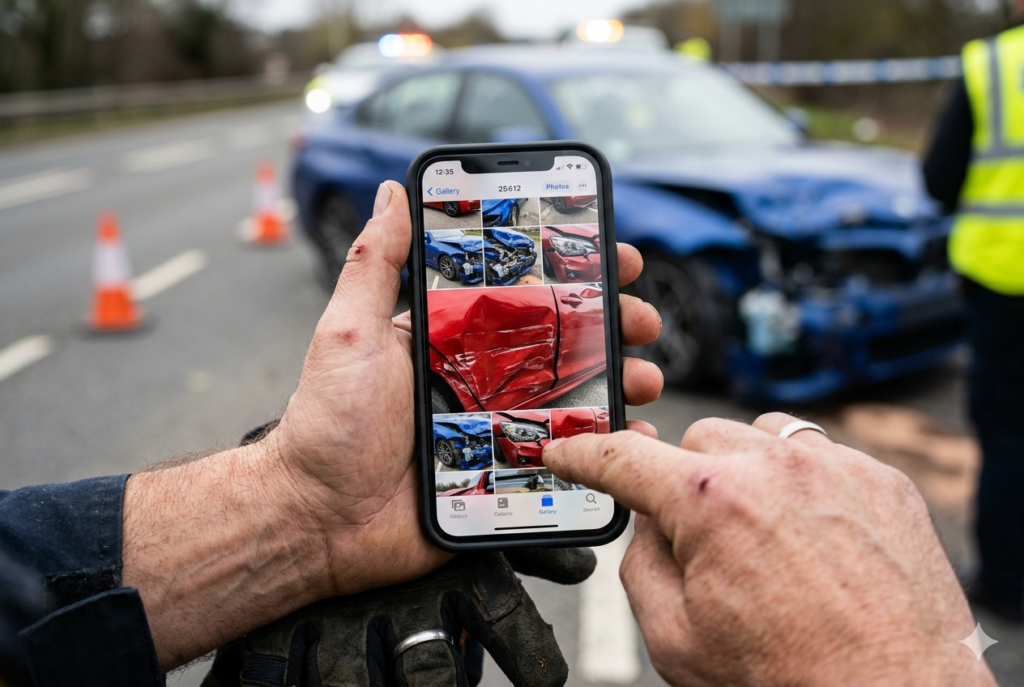
Finding the Parties Responsible for Your Injuries
The negligent driver. A driver who runs a red light on Conklin Street, rear-ends you at a Route 109 signal, tailgates on the Southern State Parkway, or makes an unsafe left turn across traffic can be held liable for your injuries. Evidence including police reports, dashcam footage, witness statements, surveillance video from nearby businesses, and cell phone usage records establishes negligence. An employer. Farmingdale's proximity to Republic Airport and the Route 110 industrial corridor generates heavy commercial and delivery vehicle traffic. When an employee causes a crash while performing work duties, their employer may be vicariously liable under respondeat superior. Commercial insurance policies typically carry $1 million or more in coverage. Vehicle manufacturers. Defective brakes, tires, airbags, seatbelts, or structural components that cause or worsen a crash give rise to strict product liability claims. No proof of negligence is needed — only that the product was defective and caused your harm. Government entities. The Village of Farmingdale maintains village streets. The Town of Oyster Bay maintains town roads. NYSDOT maintains Route 109 and the Southern State Parkway. Nassau County maintains county roads. When poor conditions — potholes, broken signals, faded markings, inadequate lighting — contribute to a crash, the responsible entity may share liability. Government claims require a Notice of Claim within 90 days under GML § 50-e and a lawsuit within one year and 90 days under GML § 50-i. Alcohol vendors. Under ABC Law § 65, bars and restaurants that serve alcohol to visibly intoxicated patrons who then cause crashes may be held liable. Farmingdale's Main Street and Conklin Street restaurant scene makes this a realistic avenue in alcohol-related accident cases. Vehicle owners. New York's permissive use doctrine holds the registered owner liable when they allow someone else to drive their vehicle and that person causes an accident.Injured in a Car Accident in Farmingdale?
Alonso Krangle LLP represents Farmingdale accident victims and families throughout Nassau County. Free consultations — you pay nothing unless we recover for you. Call 800-403-6191 for Your Free Case Review
Accident Types and the Shared Fault Rule
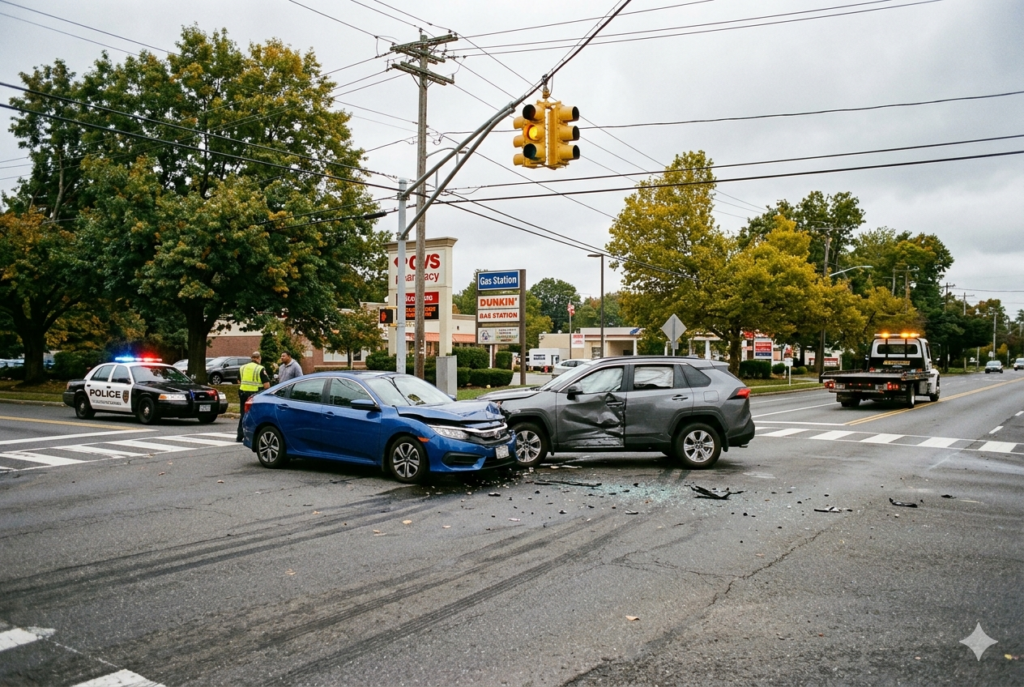
Farmingdale's crash patterns reflect its village character. Rear-end collisions on Route 109 occur when drivers traveling at speed encounter sudden congestion at village signals. Left-turn crashes on Conklin Street happen when drivers misjudge gaps in traffic while turning into commercial driveways. T-bone collisions at the Route 109 and Main Street intersection involve cross-traffic conflicts. Pedestrian accidents are a concern along Conklin Street's busy sidewalks, particularly near restaurants and retail shops where foot traffic is heavy. Sideswipe crashes happen on the Southern State Parkway during merging and lane changes. Under CPLR § 1411, New York applies pure comparative negligence. If total damages are $425,000 and you are found 25% at fault — for example, for not activating your turn signal — your recovery would be $318,750. Unlike states that bar recovery when fault exceeds 50% or 51%, New York allows you to recover at any fault level, with the award reduced proportionally.What to Do Right After a Crash
- Call 911 for police response. Within the Village of Farmingdale, the village police department responds. The police report documents the scene, parties, and witnesses — all critical for your claim.
- Get medical care the same day. Go to the emergency room or urgent care immediately. Injuries including disc herniations, concussions, and internal bleeding often present with delayed symptoms. Same-day records link injuries directly to the crash.
- Photograph everything. Vehicle damage, the roadway, traffic signals, skid marks, debris, and your injuries. In Farmingdale's commercial areas, identify any surveillance cameras from nearby businesses that may have captured the collision.
- File the NF-2 within 30 days. This absolute deadline triggers your PIP benefits. Missing it forfeits your right to no-fault coverage regardless of injury severity.
- Do not provide a recorded statement to the other driver's insurer. You are under no legal obligation to do so, and statements given without legal counsel are routinely used to diminish claims.
- Contact an attorney before accepting any settlement. Early offers are calculated to close your claim cheaply before the full cost of your injuries is known.
Compensation Available Under New York Law
Economic damages cover your financial losses: medical expenses beyond PIP, lost wages, diminished earning capacity, and property damage. In serious cases, these include future treatment projections, home modifications, and long-term care costs. Non-economic damages compensate for physical pain and suffering, emotional distress, loss of enjoyment of life, permanent scarring and disfigurement, and loss of consortium. New York places no cap on non-economic damages in car accident cases. Punitive damages apply only in extreme cases — severely intoxicated driving, street racing, or willful recklessness. In wrongful death cases, EPTL § 5-4.1 permits recovery of funeral costs, lost financial support, and loss of companionship. UM/UIM coverage supplements recovery when the at-fault driver's insurance is insufficient.How Insurers Undervalue Your Claim
Offering quick settlements before your treatment ends. Insurers present early offers designed to resolve claims before the full scope of injuries is clear. Accepting permanently waives further recovery — even if your condition worsens significantly. Turning your recorded statements against you. Adjusters use recorded interviews to capture admissions, minimizing language, and inconsistencies that become ammunition for reducing your claim. Seeking unrestricted access to your medical history. Broad medical authorizations allow insurers to blame pre-existing conditions for your current symptoms. Arguing that treatment gaps prove minor injuries. Missing appointments or delaying follow-ups gives insurers documented grounds to minimize your claim's seriousness. Using defense medical examiners to undercut your treating doctors. "Independent" examiners hired by insurers frequently produce reports minimizing injuries. Your attorney can counter these with your own medical experts.
Key Fact: Accident victims with experienced legal counsel consistently recover higher compensation than those who negotiate with insurance companies on their own. Insurers know this and prioritize settling claims before victims retain attorneys.
Deadlines That Govern Your Case
| Action | Deadline | Authority |
|---|---|---|
| Notify insurer / file NF-2 | 30 days | Ins. Law § 5103 |
| Personal injury lawsuit | 3 years | CPLR § 214 |
| Wrongful death lawsuit | 2 years | EPTL § 5-4.1 |
| Notice of Claim (government entity) | 90 days | GML § 50-e |
| Lawsuit against government entity | 1 year + 90 days | GML § 50-i |
| UM/UIM claim | 6 years (contract) | CPLR § 213 |
Government Claim Deadline
If your crash involved a Village of Farmingdale vehicle, Town of Oyster Bay equipment, Nassau County road maintenance, or a hazardous condition on Route 109 or the Southern State Parkway maintained by NYSDOT, you must file a Notice of Claim within 90 days. This is one of the shortest deadlines in New York personal injury law and missing it almost always bars your claim permanently.Frequently Asked Questions
I was in a crash on Conklin Street in Farmingdale when a car turned left into my path — what should I do?
Left-turn collisions on Conklin Street are common due to vehicles turning into commercial driveways across oncoming traffic. Call 911, get medical attention the same day, and file your NF-2 within 30 days. Do not speak to the other driver's insurance company. The turning driver is generally liable for failing to yield, though the insurer may try to assign you partial fault for speed or failure to brake. Surveillance footage from nearby businesses can be critical evidence — it must be requested quickly before it is overwritten.
How do I know if my injuries meet the serious injury threshold?
If you have any bone fracture, you automatically qualify. For soft tissue injuries like herniated discs, torn ligaments, or chronic pain, you need objective medical evidence — MRI findings, range-of-motion testing, and medical expert opinions establishing that the injury is permanent or significantly limiting. An experienced car accident attorney can review your medical records and advise whether your injuries meet the standard.
What are the filing deadlines for a car accident case in New York?
NF-2 for no-fault benefits: 30 days. Personal injury lawsuit: 3 years (CPLR § 214). Wrongful death: 2 years (EPTL § 5-4.1). Government entity Notice of Claim: 90 days (GML § 50-e). Government lawsuit: 1 year + 90 days (GML § 50-i). UM/UIM contract claims: 6 years.
Can I file a claim if I was partially at fault?
Yes. Under CPLR § 1411, New York's pure comparative negligence rule reduces your compensation by your fault percentage but never bars it. A plaintiff found 55% at fault can still recover 45% of total damages. This is significantly more favorable than the rules in many other states.
What does it cost to hire Alonso Krangle LLP?
Nothing upfront. We work on a contingency fee basis — you pay no legal fees or costs unless we recover compensation for you. Your initial consultation is free.
What if a hit-and-run driver struck me and fled?
If the at-fault driver cannot be identified, you can file a claim under your own uninsured motorist (UM) coverage. You must report the hit-and-run to police within 24 hours and to the Motor Vehicle Accident Indemnification Corporation (MVAIC) within 90 days. UM coverage is required on all New York auto policies, so you have this protection even if you do not remember purchasing it.
The driver who hit me was working for a delivery service — how does that affect my claim?
When a driver causes an accident during work duties, the employer may be vicariously liable under the doctrine of respondeat superior. This is significant because commercial insurance policies typically carry limits of $1 million or more. This applies to truck operators, delivery drivers, rideshare drivers on active trips, and any employee driving for work purposes.
Can I choose my own doctor for treatment?
Yes. Under New York's no-fault system, you have the right to select your own treating physician. You are not required to see a doctor recommended by any insurance company. Choosing a doctor experienced in treating accident injuries and who understands the documentation requirements for legal claims can strengthen both your recovery and your case.
Related Resources
Speak with An Attorney
Submit This Form or Call 800-403-6191