

Brentwood
Brentwood is one of the largest and most densely populated communities in Suffolk County, where Crooked Hill Road, Suffolk Avenue, the Long Island Expressway, and the Sagtikos State Parkway carry heavy commuter and commercial traffic through residential neighborhoods and commercial corridors every day. Pedestrian strikes on Suffolk Avenue, fatal crashes near the LIE service roads, and multi-vehicle collisions on the Sagtikos Parkway are well documented. Alonso Krangle LLP represents Brentwood car accident victims, pursuing maximum compensation through every available legal channel.
Dangerous Traffic Conditions in Brentwood
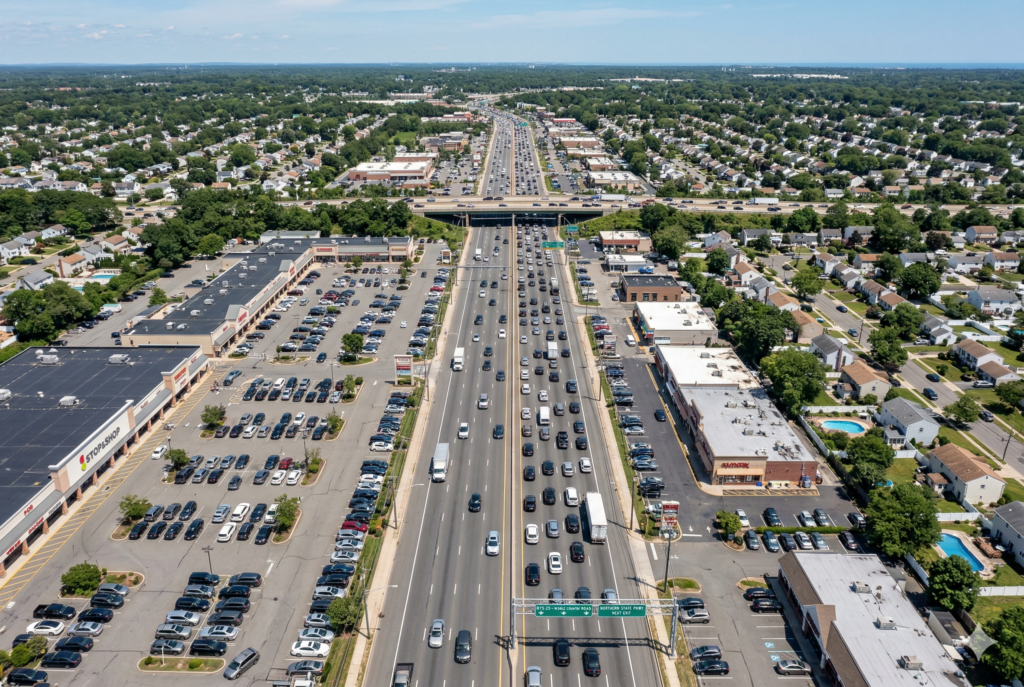
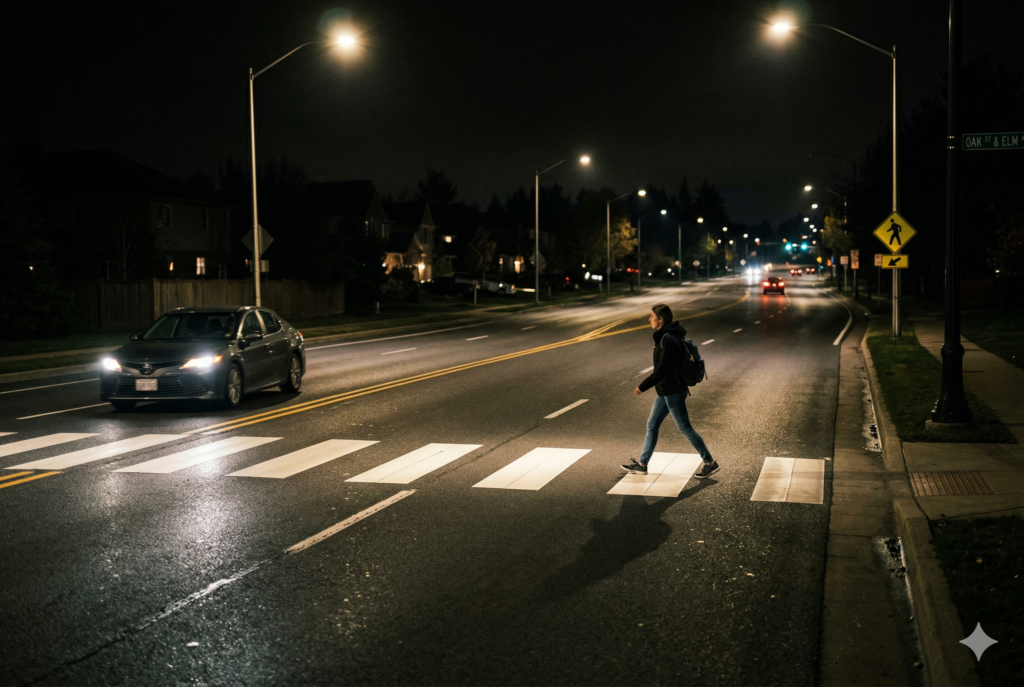
Brentwood is an unincorporated hamlet within the Town of Islip in Suffolk County, one of the largest communities on Long Island by both area and population. Crooked Hill Road runs through the community's center, connecting residential neighborhoods to major highways. Suffolk Avenue (County Road 100) crosses Brentwood as a busy east-west corridor, carrying heavy commercial and commuter traffic and serving as a through-route between Bay Shore and Central Islip. The Long Island Expressway (I-495) passes through the northern portion of Brentwood, and the Sagtikos State Parkway runs along its western boundary — two of the highest-volume limited-access highways on Long Island. Suffolk Avenue has been the site of multiple fatal and serious-injury crashes involving pedestrians, including pedestrians struck while crossing the roadway during early morning and evening hours. The LIE service roads through the Brentwood area carry a mix of highway-speed and local traffic that produces frequent rear-end and sideswipe collisions. The Sagtikos Parkway — the most dangerous north-south highway on Long Island, averaging 1.4 crashes per day with 20 serious-injury crashes over a recent two-year period — runs directly through Brentwood's western side. Brentwood Road, Washington Avenue, and the routes connecting to the Brentwood LIRR station add further traffic pressure to an already congested community. Suffolk County recorded 164 traffic deaths in 2022, the highest of any county in New York State. Traffic fatalities across Long Island rose approximately 40% since 2019. One in three fatal crashes involve speeding, and one in three involve alcohol. Nassau and Suffolk counties combined average 83 fatal or injury-causing accidents every day.
Local Hazard: The Sagtikos State Parkway, which runs through Brentwood, has been identified as the most dangerous north-south highway on Long Island, averaging 1.4 crashes per day with 20 serious-injury crashes documented over a recent two-year period. Suffolk Avenue through Brentwood has been the site of multiple fatal pedestrian strikes, with pedestrians struck while crossing the wide roadway during low-visibility conditions.
How the No-Fault System Applies to Your Accident
New York's no-fault insurance system under Insurance Law § 5102(a) requires every registered vehicle to carry PIP coverage. After a crash in Brentwood, your own insurer pays your PIP benefits regardless of who caused the accident. PIP covers up to $50,000: medical treatment within one year, lost wages at $2,000/month for up to three years, and miscellaneous expenses at $25/day for one year. The NF-2 application must reach your insurer within 30 days under Insurance Law § 5103. Late filing forfeits benefits entirely. The fundamental gap: PIP pays nothing for pain and suffering, emotional distress, or diminished quality of life. A pedestrian struck on Suffolk Avenue who survives with permanent injuries receives PIP for medical treatment and partial lost wages — but nothing for the chronic pain, the fear of crossing streets, or the life-altering limitations they now face. Recovering non-economic damages requires proving your injuries meet the serious injury threshold and pursuing a separate claim against the at-fault driver.Meeting the Serious Injury Standard
Insurance Law § 5102(d) defines nine categories of "serious injury" that permit a lawsuit for pain and suffering. Without meeting at least one, your recovery is limited to PIP benefits. The categories: death; dismemberment; significant disfigurement; fracture; loss of a fetus; permanent loss of use of a body organ, member, function, or system; permanent consequential limitation of use; significant limitation of use; and a medically determined injury preventing substantially all customary daily activities for 90 of the first 180 days after the accident. Any fracture automatically qualifies. The "limitation" categories require extensive documentation: MRI/CT imaging, quantified range-of-motion testing, nerve conduction studies, and expert medical opinions connecting the injury to the accident and establishing its significance or permanence. Insurers deploy defense medical examiners to challenge these claims. Thorough medical documentation from day one is essential.
Injuries Caused by Brentwood Car Accidents
Brentwood's crash dynamics — pedestrian strikes on Suffolk Avenue, high-speed Sagtikos Parkway collisions, LIE service road crashes, and intersection impacts on Crooked Hill Road — produce the full range of serious injuries.Traumatic Brain Injuries
Pedestrians struck by vehicles on Suffolk Avenue and occupants of vehicles in Sagtikos Parkway crashes face high TBI risk. Brain injuries range from concussions producing temporary cognitive symptoms to severe TBIs causing permanent impairment, personality changes, and inability to work or live independently. Early neuroimaging and neuropsychological testing are essential.Fractures and Broken Bones
Intersection crashes on Crooked Hill Road and Suffolk Avenue produce hip, pelvic, rib, and leg fractures. Pedestrians struck by vehicles sustain severe lower-extremity fractures. Complex fractures requiring surgical fixation involve extended recovery. Any fracture automatically meets the serious injury threshold.Spinal Cord Injuries and Paralysis
High-speed crashes on the Sagtikos Parkway and LIE can cause catastrophic spinal cord damage. These injuries demand emergency surgery, extended hospitalization, and lifelong medical management. Lifetime costs including medical care, home modifications, and personal care routinely reach several million dollars.Herniated and Bulging Discs
Rear-end collisions on the LIE service roads and Suffolk Avenue compress spinal discs, causing herniations that press on nerves and produce chronic pain, sciatica, and weakness. These injuries may require epidural injections, physical therapy, or spinal fusion surgery. Properly documented disc injuries frequently meet the "significant limitation" threshold.Internal Organ Damage
Blunt force trauma from seatbelt compression, steering wheel impact, and side-panel intrusion can rupture the spleen, lacerate the liver, or damage kidneys. Pedestrians struck by vehicles face extreme internal injury risk. These injuries may show no external signs — same-day emergency evaluation is critical.Whiplash and Cervical Injuries
The sudden acceleration-deceleration forces in rear-end crashes on congested Brentwood roads damage cervical muscles, ligaments, and discs. Chronic whiplash produces lasting pain, stiffness, headaches, and limited range of motion. Documented chronic whiplash with objective findings can meet the serious injury threshold.Torn Ligaments and Soft Tissue Injuries
ACL tears, meniscus damage, rotator cuff injuries, and labral tears result from the sudden impact forces of a collision. Arthroscopic surgery and months of rehabilitation are typically required, producing significant medical expenses and extended time away from work.PTSD and Psychological Injuries
Surviving a violent crash — particularly pedestrian strikes, parkway collisions, or accidents involving a death — can cause PTSD, driving phobia, anxiety, depression, and insomnia. New York courts recognize these injuries as compensable. Treatment records from a mental health professional document these conditions for legal purposes.
Determining Legal Liability
The negligent driver. A driver who strikes a pedestrian on Suffolk Avenue, rear-ends a vehicle on the LIE service road, speeds on the Sagtikos Parkway, or runs a red light on Crooked Hill Road can be held liable. Police reports, dashcam footage, traffic camera recordings, cell phone records, and witness statements establish negligence. An employer. Brentwood's location along the LIE corridor generates significant commercial vehicle traffic. When an employee causes a crash during work duties, their employer may be vicariously liable. Commercial insurance policies typically carry $1 million or more in coverage. Vehicle manufacturers. Defective brakes, tires, airbags, or structural components give rise to strict product liability claims — no negligence proof required. Government entities. The Town of Islip maintains local Brentwood roads. NYSDOT maintains the LIE, the Sagtikos Parkway, and Sunrise Highway. Suffolk County maintains county roads including Suffolk Avenue. When road defects contribute to crashes, the responsible entity may share liability. Government claims require a Notice of Claim within 90 days under GML § 50-e and a lawsuit within one year and 90 days under GML § 50-i. Alcohol vendors. Under ABC Law § 65, bars that serve visibly intoxicated patrons who then cause crashes can be held liable. Vehicle owners. The permissive use doctrine holds vehicle owners liable when they allow another person to drive and that person causes an accident.Injured in a Car Accident in Brentwood?
Alonso Krangle LLP represents Brentwood accident victims throughout Suffolk County. Free consultations — you pay nothing unless we recover compensation for you. Call 800-403-6191 for a Free Consultation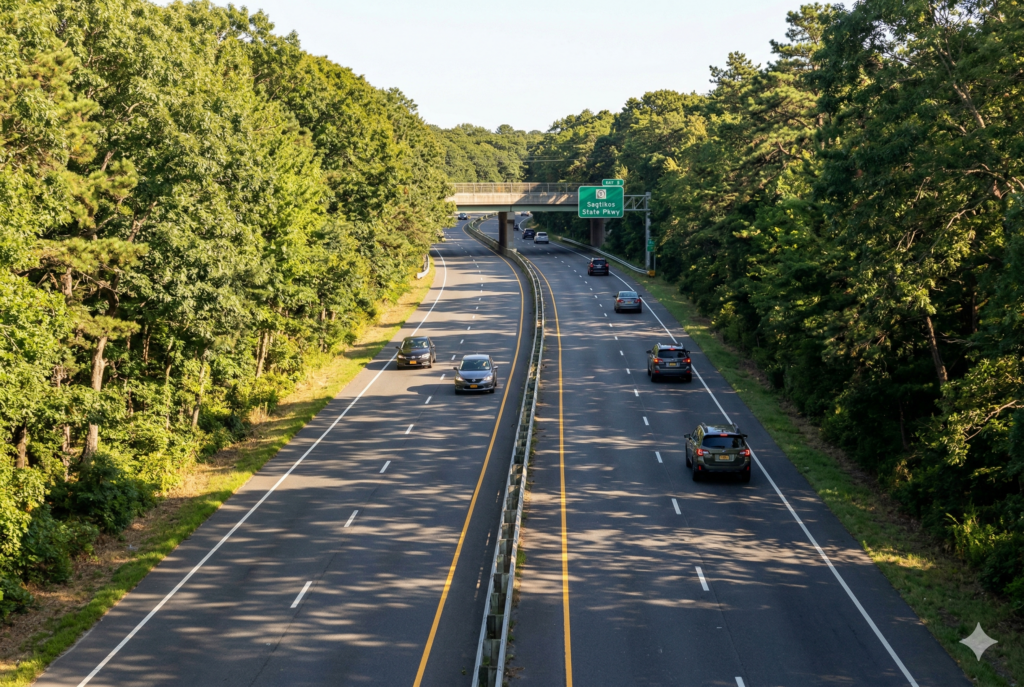
How Crashes Happen in Brentwood and How Fault Is Allocated
Brentwood's crash patterns reflect its size and road network. Pedestrian strikes on Suffolk Avenue — where pedestrians cross a wide, high-speed roadway — are a recurring and often fatal crash type. Rear-end collisions on the LIE service roads result from traffic transitioning between highway speed and local congestion. Sideswipe and single-vehicle run-off-road crashes on the Sagtikos Parkway occur due to the parkway's narrow design and limited shoulders. T-bone collisions at signalized intersections on Crooked Hill Road involve red-light violations and failure-to-yield scenarios. Under CPLR § 1411, New York's pure comparative negligence rule reduces compensation by your fault percentage but never eliminates it. If damages total $480,000 and you are found 25% at fault, your recovery would be $360,000. This is substantially more favorable than states with 50% or 51% fault bars.Actions to Take Immediately After a Crash
- Call 911. Suffolk County Police and New York State Police respond to Brentwood crashes. A police report is foundational evidence.
- Get emergency medical care the same day. High-speed crashes produce internal injuries and TBIs with delayed symptoms. Same-day medical records establish the critical link between the crash and your injuries.
- Photograph the scene. Vehicle damage, road conditions, traffic controls, skid marks, and injuries. Note any nearby surveillance cameras.
- File the NF-2 within 30 days. Absolute deadline — late filings are denied regardless of injury severity.
- Do not give the opposing insurer a recorded statement. No legal obligation. Statements become claim-reduction ammunition.
- Consult an attorney before accepting any settlement offer. Early offers close claims cheaply before the full cost of injuries is known.
Understanding Your Right to Compensation
Economic damages: Medical costs beyond PIP, lost wages, diminished earning capacity, property damage. Catastrophic cases include home modifications, adaptive equipment, and lifelong personal care. Non-economic damages: Pain and suffering, emotional distress, loss of enjoyment of life, disfigurement, loss of consortium. No cap in New York. Punitive damages: Available in extreme cases of misconduct — severe intoxication, reckless speeding, deliberate disregard for safety. In wrongful death cases, EPTL § 5-4.1 permits recovery of funeral costs, lost support, and loss of companionship. UM/UIM coverage supplements recovery when the at-fault driver's insurance is insufficient.How Insurance Companies Fight Your Claim
Quick lowball settlements. Offers presented before injuries are fully diagnosed, designed to close claims cheaply. Accepting permanently waives further recovery. Recorded statement traps. Every word becomes ammunition for reducing your claim. Medical history searches. Broad authorizations let insurers blame pre-existing conditions for current symptoms. Treatment gap attacks. Missing appointments gives insurers ammunition to minimize injury seriousness. Defense medical examiners. Insurance-hired doctors minimize injuries. Your attorney prepares you and retains independent experts.
Key Fact: Accident victims represented by experienced attorneys consistently recover substantially higher compensation. In cases involving the Sagtikos Parkway or LIE — where injuries tend to be severe — experienced legal counsel is especially important for documenting the full scope of lifetime damages.
Deadlines You Cannot Afford to Miss
| Action | Deadline | Authority |
|---|---|---|
| Notify insurer / file NF-2 | 30 days | Ins. Law § 5103 |
| Personal injury lawsuit | 3 years | CPLR § 214 |
| Wrongful death lawsuit | 2 years | EPTL § 5-4.1 |
| Notice of Claim (government entity) | 90 days | GML § 50-e |
| Lawsuit against government entity | 1 year + 90 days | GML § 50-i |
| UM/UIM claim | 6 years (contract) | CPLR § 213 |
Government Entity Deadline Warning
If your crash involved a Town of Islip vehicle, Suffolk County road maintenance equipment, or a hazardous condition on the LIE, Sagtikos Parkway, Sunrise Highway, or Suffolk Avenue, you must file a Notice of Claim within 90 days. This deadline is one of the shortest in New York personal injury law. Missing it almost always permanently bars your claim.Frequently Asked Questions
A pedestrian was struck on Suffolk Avenue in Brentwood — what legal rights does the victim have?
Pedestrians struck by vehicles can pursue claims for all damages — medical expenses, lost wages, pain and suffering — without meeting the serious injury threshold that applies to vehicle occupants. If poor lighting, missing crosswalks, or inadequate pedestrian infrastructure on Suffolk Avenue contributed to the accident, the government entity maintaining the road (Suffolk County for county roads, Town of Islip for local streets) may share liability alongside the driver. Government claims require a 90-day Notice of Claim. Even if the pedestrian shares some fault — for example, crossing outside a crosswalk — New York's comparative negligence rule reduces but never eliminates recovery.
What qualifies as a serious injury?
Insurance Law § 5102(d) defines nine categories: death, dismemberment, significant disfigurement, fracture, loss of a fetus, permanent loss of use, permanent consequential limitation, significant limitation, and a medically determined injury preventing substantially all daily activities for 90 of 180 days. Fractures auto-qualify. Other injuries need objective medical documentation.
What deadlines apply to car accident cases?
NF-2: 30 days. Personal injury: 3 years (CPLR § 214). Wrongful death: 2 years (EPTL § 5-4.1). Government claims: 90-day Notice of Claim (GML § 50-e), lawsuit within 1 year + 90 days (GML § 50-i).
Can I still recover if I was partially at fault?
Yes. Under CPLR § 1411, pure comparative negligence reduces your recovery by your fault percentage but never eliminates it. Even a plaintiff found 70% at fault can recover 30% of total damages.
What does Alonso Krangle LLP charge?
Nothing upfront. We work on a contingency fee basis — you pay no fees unless we recover compensation for you. Free initial consultation.
What if my crash happened on the Sagtikos Parkway?
The Sagtikos Parkway is maintained by NYSDOT and has been documented as the most dangerous north-south highway on Long Island. If a dangerous road condition — narrow shoulders, limited clear zones, inadequate guardrails, or steep slopes — contributed to your crash, NYSDOT may share liability. A government claim requires a Notice of Claim within 90 days. Your attorney can retain traffic engineering experts to evaluate whether the parkway design met applicable safety standards and contributed to the crash.
What if the driver who hit me was working for a delivery company?
The employer may be vicariously liable under respondeat superior, giving you access to commercial insurance policies carrying $1 million or more in coverage. This applies to truck operators, delivery drivers, rideshare drivers on active trips, and any employee driving for work purposes.
My no-fault benefits have been exhausted but I still need treatment — what now?
Once PIP's $50,000 cap is reached, your health insurance may cover ongoing treatment, subject to co-pays and deductibles. Many medical providers will treat car accident patients on a lien basis — meaning they wait for payment until your personal injury case resolves. Your lawsuit against the at-fault driver seeks to recover all medical expenses beyond what PIP paid. An attorney can connect you with providers who work on this basis.
What if the other driver was drunk?
Drunk driving is clear evidence of negligence and may support punitive damages in addition to compensatory damages. Under the Dram Shop Act (ABC Law § 65), the bar or restaurant that served the intoxicated driver may also be liable. This creates an additional source of recovery — especially important when the drunk driver has minimal insurance coverage.
Related Resources
Speak with An Attorney
Submit This Form or Call 800-403-6191