

Central Islip
Central Islip lies at the geographic and institutional heart of Suffolk County, home to the county courthouse complex and surrounded by some of the busiest traffic corridors on Long Island. The convergence of Route 111, Suffolk Avenue, Carleton Avenue, and the Long Island Expressway through this community creates persistent collision risks for drivers, cyclists, and pedestrians. Alonso Krangle LLP represents Central Islip car accident victims and their families, pursuing full compensation for injuries caused by negligence on these roads.

Traffic Hazards in Central Islip
Central Islip is an unincorporated hamlet within the Town of Islip in Suffolk County. The community sits along the Route 111 (Islip Avenue) corridor between the hamlet of Islip to the south and Hauppauge to the north. Suffolk Avenue (County Road 100) runs east-west through Central Islip, intersecting Route 111 and Carleton Avenue (County Road 17) — two of the area's most accident-prone intersections. The Long Island Expressway (I-495) passes along the hamlet's northern boundary, with exits 56 through 59 channeling high-speed highway traffic onto local streets. The intersection of Carleton Avenue and Suffolk Avenue has been the site of fatal and serious-injury crashes, including a 2024 collision where a vehicle ran a red light and struck another car broadside. The Long Island Motor Parkway crossing at Route 111 sees frequent rear-end collisions as drivers navigate the transition between highway-speed and signal-controlled traffic. Commercial traffic is heavy throughout Central Islip due to the Suffolk County courthouse complex on Center Drive, Long Island MacArthur Airport nearby, and the industrial and retail centers that surround the community. Truck deliveries, rideshare vehicles, and commuters share the same congested roads at peak hours. Suffolk County led New York State in traffic fatalities in 2022 with 164 deaths — more than any other county. The Long Island Expressway between exits 57 and 60, running directly through the Central Islip area, carries a disproportionate share of high-speed collisions. Across Long Island, an average of 83 fatal or injury-causing accidents occur every day. One in three fatal crashes involve speeding, and one in three involve alcohol. Understanding your legal rights after a crash in Central Islip is essential to protecting your ability to recover fair compensation.
Local Context: The Carleton Avenue and Suffolk Avenue intersection in Central Islip is one of the most dangerous crossings in the Town of Islip, with documented fatal crashes involving red-light violations. Suffolk County Supreme Court — where most car accident lawsuits in the county are tried — is located directly in Central Islip on Center Drive, meaning local juries are drawn from communities intimately familiar with these roads.
No-Fault Insurance: What It Covers and What It Doesn't
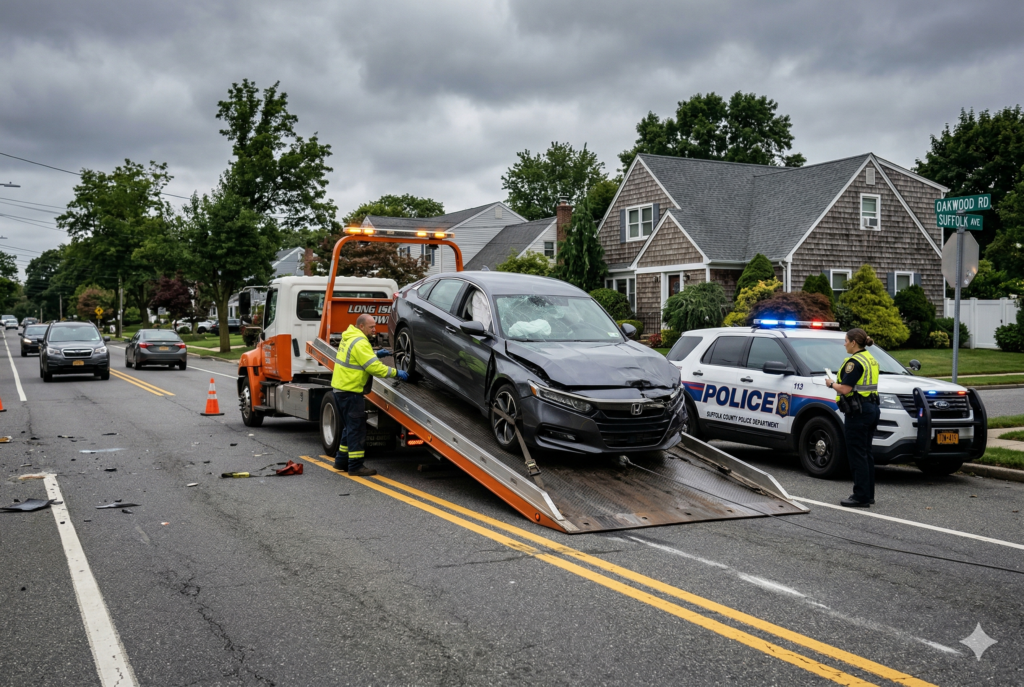
Under Insurance Law § 5102(a), New York requires all registered vehicles to carry Personal Injury Protection (PIP) coverage. When you are injured in a car accident, your own auto insurance pays your PIP benefits regardless of fault. This system provides a financial safety net for immediate expenses but carries important limitations. PIP benefits max out at $50,000 and cover three categories of expenses: medical costs for treatment obtained within one year of the accident, lost wages capped at $2,000 per month for up to three years, and incidental expenses at $25 per day for up to one year. The clock starts ticking immediately — you must submit the NF-2 application to your insurer within 30 days of the accident as required by Insurance Law § 5103. What PIP does not cover is often the most significant component of an accident victim's losses: pain and suffering. The no-fault system was designed to handle routine claims efficiently, but it was not designed to compensate people for the physical agony, emotional distress, and disruption to their lives caused by another driver's negligence. For that, you need to step outside the no-fault system by demonstrating that your injuries meet the "serious injury" standard — and then pursue a separate claim against the driver who caused the crash.Proving a Serious Injury Under New York Law
Insurance Law § 5102(d) defines nine categories of "serious injury" that unlock your right to sue for pain and suffering. This threshold exists because New York's no-fault system trades away the right to sue in minor accident cases in exchange for guaranteed PIP benefits. Only injuries meeting one or more of these categories allow a full lawsuit. The categories include: death, dismemberment, significant disfigurement, fracture, loss of a fetus, permanent loss of use of a body organ or system, permanent consequential limitation of a body organ or member, significant limitation of a body function or system, and a medically determined injury preventing substantially all usual daily activities for 90 of the first 180 days after the accident. A bone fracture is the clearest path — it automatically satisfies the threshold with no additional proof required beyond the diagnosis itself. The "limitation" categories are where most disputes arise. If you suffered a herniated disc, torn rotator cuff, or nerve damage, you will need to demonstrate the extent of your limitations through objective medical evidence. MRI and CT scans establish the physical injury, but insurers demand more — quantified range-of-motion testing, electromyography (EMG) results, functional capacity evaluations, and expert medical testimony explaining why the limitation is permanent or significant. Insurance companies send injured people to defense medical examiners whose job is to produce reports minimizing these findings. Documenting your injuries thoroughly from the very first treatment session gives your attorney the ammunition to counter these challenges.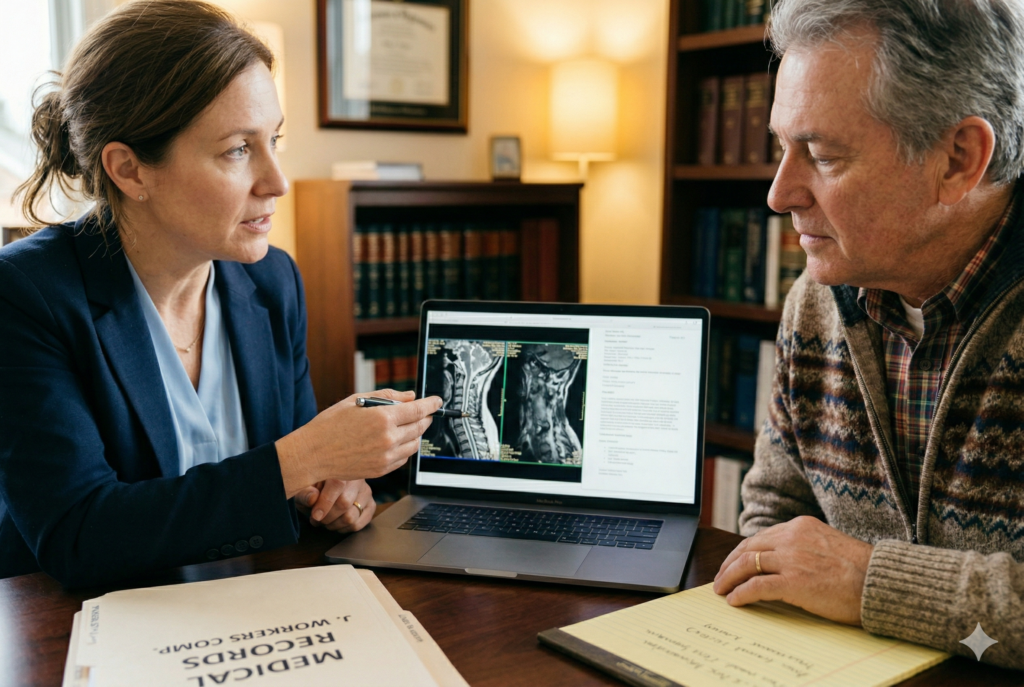
Common Injuries from Central Islip Crashes
Central Islip's mix of high-speed expressway traffic, heavy commercial vehicles near the courthouse and airport corridors, and congested local intersections produces a wide spectrum of injuries. The following are among the most serious and frequently litigated in car accident cases arising from this community.Fractures and Broken Bones
Side-impact crashes at the Carleton Avenue and Suffolk Avenue intersection frequently produce hip, pelvic, and rib fractures. Arm and wrist fractures are common from bracing against the dashboard or steering wheel. Every fracture automatically satisfies the serious injury threshold, creating a clear legal path to pursue damages for pain and suffering beyond no-fault benefits.Traumatic Brain Injuries
High-speed collisions on the LIE and rear-end crashes that slam a driver's head into the headrest or window can cause traumatic brain injuries. TBIs range from concussions producing temporary confusion and headaches to severe injuries causing permanent cognitive deficits, personality changes, and the inability to work or live independently.Herniated and Bulging Discs
The violent forces transmitted through the spine during a collision can cause intervertebral discs to herniate or bulge, compressing nearby nerves. This results in chronic back pain, sciatica radiating into the legs, numbness, and reduced mobility. When supported by MRI findings and documented functional limitations, disc injuries frequently meet the "significant limitation" threshold category.Torn Ligaments and Soft Tissue Injuries
ACL tears, meniscus damage in the knee, rotator cuff tears in the shoulder, and labral tears in the hip are common when the body absorbs sudden twisting or impact forces. These injuries typically require surgery followed by months of physical therapy, producing significant medical bills and prolonged inability to work or perform daily activities.Internal Organ Damage
Seatbelt compression injuries, steering wheel impacts, and side-panel intrusions can cause internal bleeding, ruptured spleens, liver injuries, and kidney damage. These injuries may not present immediate symptoms, making same-day medical evaluation essential. Without prompt treatment, internal injuries can become life-threatening.Whiplash and Neck Injuries
Stop-and-go traffic on Route 111 and the LIE service roads makes rear-end collisions a daily occurrence in Central Islip. These crashes frequently cause whiplash — the rapid back-and-forth snapping of the neck that damages muscles, ligaments, and discs in the cervical spine. Chronic whiplash can produce lasting pain, stiffness, headaches, and reduced range of motion.Burns and Disfigurement
Vehicle fires, contact with hot engine components, and chemical exposure from deployed airbags can cause serious burns. Facial lacerations from broken glass and deep scarring from seatbelt abrasion are also common. Under New York law, significant disfigurement is an independent category of serious injury, allowing burn and scar victims to pursue pain and suffering claims.PTSD and Emotional Trauma
Witnessing or surviving a violent crash can produce post-traumatic stress disorder, driving phobia, anxiety, depression, and insomnia. These psychological injuries are compensable under New York law and may qualify under the 90/180-day rule if they prevent you from returning to your normal routine. Mental health treatment records and expert psychiatric testimony support these claims.Determining Fault After an Accident
The negligent driver. A driver who runs a red light at Carleton Avenue and Suffolk Avenue, speeds through a work zone on the LIE, or rear-ends you at a signal on Route 111 can be held liable for your injuries. Establishing negligence requires proving four elements: the driver owed you a duty of care, they breached that duty, the breach caused the collision, and you suffered damages. Police reports, witness accounts, dashcam footage, and accident reconstruction experts all contribute to building this proof. The driver's employer. Commercial vehicle traffic is heavy in Central Islip due to the courthouse complex, nearby airport, and industrial corridors. When an employee driving a work vehicle causes a crash, the employer may be vicariously liable under respondeat superior. This is significant because commercial insurance policies typically carry coverage limits of $1 million or more — far exceeding the minimum $25,000/$50,000 limits on personal auto policies. Vehicle manufacturers. A defective brake system, faulty tire, malfunctioning airbag, or flawed steering component that causes or worsens a crash can give rise to a strict product liability claim against the manufacturer. Unlike negligence claims, product liability does not require proving the manufacturer acted carelessly — only that the product was defective and the defect caused your injuries. Government entities. When a pothole, missing traffic sign, broken signal, poor road design, or inadequate drainage contributed to a crash, the entity responsible for maintaining that road may be liable. In Central Islip, local roads fall under the Town of Islip, county roads like Suffolk Avenue and Carleton Avenue are maintained by Suffolk County, and state routes like Route 111 and the LIE are NYSDOT's responsibility. All government claims require a Notice of Claim within 90 days under GML § 50-e and a lawsuit filed within one year and 90 days under GML § 50-i. Bars and restaurants. Under ABC Law § 65, New York's Dram Shop Act, a licensed establishment that serves alcohol to a visibly intoxicated person who then causes a car accident can be held liable for the resulting injuries. This creates an additional source of compensation beyond the drunk driver's own insurance policy. Vehicle owners. New York's permissive use doctrine holds vehicle owners liable when they lend their car to a driver who causes an accident. Even if the at-fault driver has minimal insurance, the vehicle owner's policy may provide additional coverage for your injuries.Hurt in a Central Islip Car Accident?
Alonso Krangle LLP represents accident victims throughout Central Islip and Suffolk County. We offer free case evaluations and work on a contingency basis — you owe nothing unless we win. Call 800-403-6191 Today
Accident Patterns and Shared Fault Rules
Central Islip's intersection crashes follow predictable patterns. T-bone collisions at the Carleton Avenue and Suffolk Avenue crossing often result from red-light violations. Rear-end pileups on the LIE service roads near exits 57-59 are caused by sudden deceleration in congested traffic. Pedestrian accidents occur near the LIRR station and the courthouse complex where foot traffic is heavy. Sideswipe collisions happen when drivers merge from the Long Island Motor Parkway onto Route 111 without adequate clearance. New York applies pure comparative negligence under CPLR § 1411, which means that your right to compensation is never entirely eliminated by partial fault. If a jury determines your total damages are $350,000 but assigns you 25% fault — perhaps for traveling slightly above the posted speed limit — your recovery is reduced to $262,500. Unlike states that bar recovery when fault exceeds 50% or 51%, New York's rule ensures that even significantly at-fault parties can recover a proportional share of their damages.What to Do Immediately After a Collision
- Call 911 immediately. A police report is one of the most important documents in any car accident claim. It records the location, time, weather conditions, driver information, witness statements, and the officer's initial observations about fault. Request a copy of the report once it is filed.
- Get medical attention within hours, not days. Go to the emergency room or urgent care on the day of the crash. Delayed treatment creates a gap in your medical record that insurance companies will exploit to argue your injuries are unrelated to the accident or not as severe as you claim.
- Photograph everything at the scene. Use your phone to capture vehicle damage from multiple angles, the roadway surface, any traffic signs or signals, skid marks, weather conditions, and your injuries. Include wide shots showing the overall scene and close-ups showing specific damage.
- File your NF-2 within the 30-day window. Contact your auto insurance company to obtain and submit the NF-2 application. This form initiates your no-fault benefits and must be filed within 30 days. Failure to meet this deadline can result in forfeiture of PIP benefits.
- Decline to give the opposing insurer a recorded statement. The other driver's insurance adjuster has no legal right to your recorded statement. Providing one before consulting an attorney gives the insurer material to twist against your claim.
- Speak with an attorney before signing anything or accepting any offer. Insurance companies often rush early settlement offers to close claims cheaply, before the full extent of injuries is clear. A car accident attorney can evaluate the true value of your case and protect your interests.
Types of Compensation You Can Pursue
Economic damages include every quantifiable financial loss traceable to the accident. Medical expenses beyond what PIP pays — surgeries, hospitalizations, imaging, physical therapy, and future care needs — are the most substantial component for many victims. Lost wages cover both time already missed from work and the projected reduction in earning capacity if your injuries limit your ability to perform your job. Property damage to your vehicle and personal items is also recoverable. Non-economic damages account for the human toll of the accident. Physical pain and suffering, emotional anguish, loss of enjoyment of life, permanent scarring or disfigurement, and the strain on your closest relationships (loss of consortium) are all compensable. New York does not impose a cap on non-economic damages in personal injury cases, allowing juries to value these losses based on the specific facts of each case. Punitive damages are reserved for the most egregious misconduct — a driver who was severely intoxicated, engaged in road racing, or exhibited other willful disregard for safety. These damages are designed to punish and deter, and while they are uncommon, they can apply in the most reckless cases. When a car accident results in death, New York's wrongful death statute (EPTL § 5-4.1) allows the deceased person's estate to recover funeral costs, the financial support the family has lost, and compensation for the loss of companionship and parental guidance. If the at-fault driver's insurance is insufficient, your own UM/UIM coverage can help bridge the gap.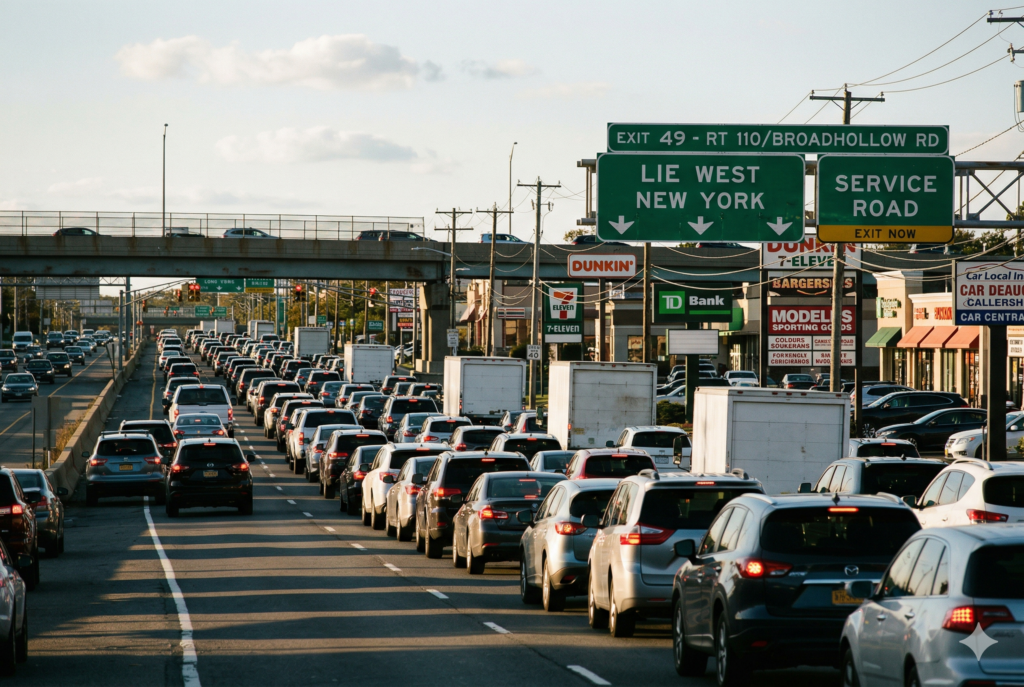
How Insurers Try to Reduce Your Payout
Quick settlement offers before your treatment is complete. The other driver's insurer may present an offer within the first few weeks. This amount rarely accounts for future medical needs, ongoing pain, or long-term earning impacts. Accepting prematurely means you can never reopen the claim, even if your condition deteriorates. Recorded statements used as ammunition. Adjusters ask seemingly innocent questions during recorded calls: "Were you wearing your seatbelt?" "Did you see the other car coming?" "How fast were you going?" Every answer becomes part of the file and can be used to argue you contributed to the accident or that your injuries are not as claimed. Blanket medical release requests. Signing an unrestricted medical authorization gives the insurer access to decades of your health records. They will search for any pre-existing back pain, prior neck injury, or mental health treatment that could be used to attribute your current symptoms to something other than the accident. Exploiting gaps in your treatment. If you miss physical therapy sessions or wait too long between doctor visits, the insurer will point to the gap as evidence that your injuries were not serious enough to require consistent care. Following your doctor's recommended treatment schedule is critical. Biased defense medical examinations. The insurer may schedule an "independent" medical examination with a doctor who regularly performs these evaluations for insurance companies. These doctors may spend limited time examining you and produce reports that downplay your injuries. Your attorney can ensure you are prepared and can retain your own medical experts to counter these opinions. Delay tactics to pressure settlement. Some insurers deliberately slow the claims process, hoping that financial pressure from unpaid bills will force you to accept a lower offer. Having an attorney who can push the case toward litigation sends a clear message that delays will not be rewarded.
Key Fact: Research consistently demonstrates that accident victims who retain legal counsel receive substantially higher compensation than those who handle claims on their own. Insurers are more likely to offer fair settlements when they know a knowledgeable attorney is prepared to take the case to trial.
Critical Legal Deadlines
| Action | Deadline | Authority |
|---|---|---|
| Notify insurer / file NF-2 | 30 days | Ins. Law § 5103 |
| Personal injury lawsuit | 3 years | CPLR § 214 |
| Wrongful death lawsuit | 2 years | EPTL § 5-4.1 |
| Notice of Claim (government entity) | 90 days | GML § 50-e |
| Lawsuit against government entity | 1 year + 90 days | GML § 50-i |
| UM/UIM claim | 6 years (contract) | CPLR § 213 |
Government Entity Deadline
If your crash involved a Town of Islip vehicle, Suffolk County equipment, or a hazardous condition on a county road like Suffolk Avenue or Carleton Avenue, you must file a Notice of Claim within 90 days. This deadline is not flexible and failing to meet it will almost certainly bar your claim. Contact an attorney as soon as possible to preserve your rights.Frequently Asked Questions
A car ran a red light at Carleton Avenue and Suffolk Avenue and hit my vehicle — what are my options?
Running a red light is clear evidence of negligence. Your immediate priority is medical attention and documenting your injuries. Then file for no-fault benefits within 30 days. If your injuries meet the serious injury threshold — a fracture, herniated disc with documented limitations, or any condition preventing you from performing substantially all of your usual activities for 90 of the first 180 days — you can pursue a lawsuit against the at-fault driver for pain and suffering and additional damages. Traffic camera footage from the intersection may be available but must be requested quickly before it is overwritten.
What qualifies as a serious injury in New York?
Under Insurance Law § 5102(d), a serious injury includes death, dismemberment, significant disfigurement, any bone fracture, loss of a fetus, permanent loss of use of an organ or system, permanent consequential limitation of a body organ or member, significant limitation of a body function or system, and a medically determined injury preventing substantially all daily activities for 90 of the first 180 days. The most commonly litigated categories are the limitation categories, which require objective medical proof.
How long do I have to file a car accident lawsuit in New York?
The statute of limitations for personal injury is three years from the date of the accident under CPLR § 214. Wrongful death claims must be filed within two years. Government entity claims require a 90-day Notice of Claim followed by a lawsuit within one year and 90 days. Do not wait until close to these deadlines — evidence deteriorates and witnesses become harder to locate over time.
What if the other driver was only carrying minimum insurance?
New York's minimum liability insurance is $25,000 per person and $50,000 per accident — often inadequate for serious injuries. If the at-fault driver's policy limit is insufficient, you may be able to file a claim under your own underinsured motorist (UIM) coverage. UIM claims are governed by a six-year statute of limitations as contract claims. Your attorney can review all available insurance sources to maximize recovery.
What does a car accident case cost at Alonso Krangle LLP?
Nothing upfront. Alonso Krangle LLP works on a contingency fee basis for car accident cases. You pay no attorney's fees and no out-of-pocket costs unless we successfully recover compensation for you. The initial consultation is free.
Can I still recover compensation if I was partially at fault?
Yes. Under New York's pure comparative negligence rule (CPLR § 1411), your compensation is reduced by your percentage of fault but never eliminated. Even if you were 60% at fault, you could still recover 40% of the total damages. This makes New York more favorable to injured victims than many other states.
What happens at a defense medical examination (IME)?
The insurance company may require you to attend a medical examination conducted by a doctor they select. These exams are typically brief and focused on generating a report that minimizes your injuries. The doctor may test your range of motion, ask about symptoms, and review your records. You should be honest about your symptoms but concise in your answers. Your attorney can advise you on what to expect and may retain your own expert to counter any unfavorable findings.
The other driver was working when they hit me — does that affect my case?
Yes, significantly. When a driver causes an accident while performing work duties, their employer may be vicariously liable under the doctrine of respondeat superior. This is important because commercial insurance policies often carry coverage limits of $1 million or more, giving you access to far greater compensation than a standard personal auto policy would provide. This applies to delivery drivers, truck operators, rideshare drivers on active trips, and any employee driving a company vehicle for work purposes.
My no-fault benefits ran out but I still need treatment — what now?
PIP benefits are capped at $50,000, and for serious injuries, that amount can be exhausted quickly. Once no-fault runs out, your health insurance may cover ongoing treatment, subject to co-pays and deductibles. Additionally, if you have a valid claim against the at-fault driver, your attorney can seek to recover all medical expenses beyond what PIP paid as part of your personal injury lawsuit. Many medical providers will continue treatment on a lien basis — meaning they agree to wait for payment until your case resolves.
Related Resources
Speak with An Attorney
Submit This Form or Call 800-403-6191