

Huntington
Huntington village sits at the convergence of Route 25A (Main Street), Route 110 (New York Avenue), and Jericho Turnpike — three of the most heavily traveled corridors in Suffolk County. This concentration of traffic, combined with a dense mix of commercial activity, pedestrians, and commuter routes, generates hundreds of collisions each year that cause devastating injuries. Alonso Krangle LLP represents Huntington car accident victims from the initial insurance filing through trial, fighting for the compensation their injuries demand.
Dangerous Roads and Intersections in Huntington
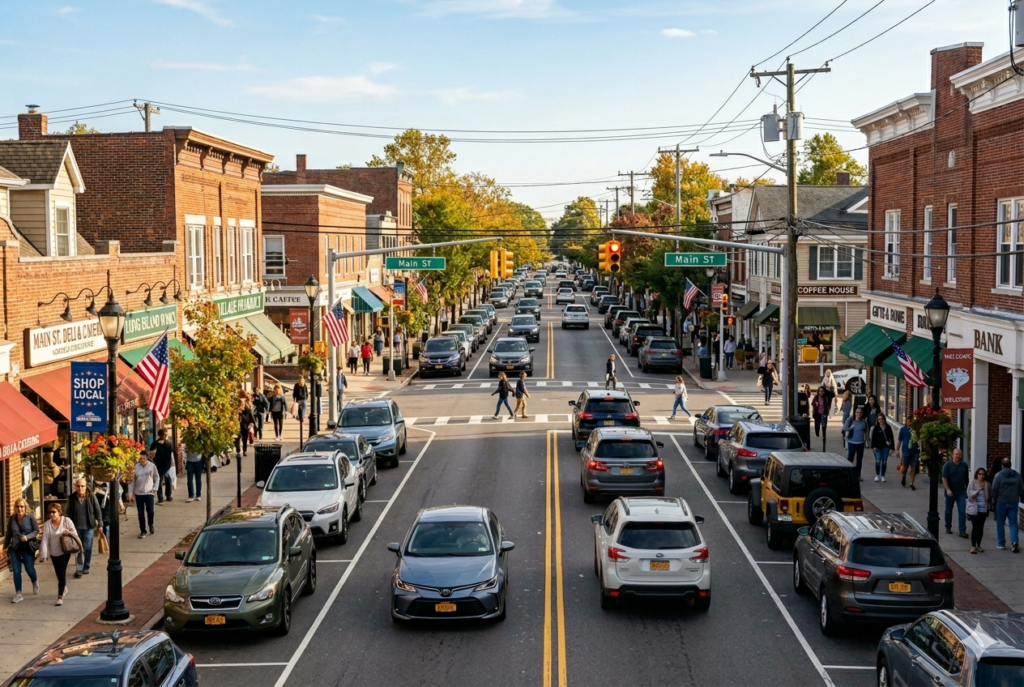
Huntington is the principal hamlet and commercial center of the Town of Huntington in Suffolk County. Route 25A runs through the heart of the village as Main Street, widening to four lanes through the commercial core before narrowing again as it heads east toward Centerport and Northport. Route 110 (New York Avenue) runs north-south directly through the hamlet, connecting the Northern State Parkway and the LIE to the south with Huntington Harbor to the north. These two major state highways intersect in the center of Huntington village, creating one of Long Island's busiest junctions. The intersection of Jericho Turnpike and Route 110 in nearby Huntington Station reports over 200 accidents annually, making it one of the most accident-heavy intersections on Long Island. Within Huntington village itself, the Route 25A and New York Avenue intersection funnels traffic from every direction through a signalized crossing surrounded by restaurants, shops, and pedestrian activity. On New York Avenue, congestion and driver frustration produce aggressive lane changes and rear-end collisions, particularly near the intersection with Broadway. Pulaski Road has documented poor visibility around its curves and becomes particularly dangerous during rain and snow. Suffolk County recorded 164 traffic deaths in 2022 — more than any other county in New York State. Long Island traffic fatalities have risen approximately 40% since 2019, with crashes growing more severe even as the total number of accidents and miles driven have declined. One in three fatal crashes involve speeding, and one in three involve alcohol. The Walt Whitman Mall area, the Five Corners intersection, and the routes connecting Huntington to the LIE all present elevated risks for drivers, cyclists, and pedestrians alike.
Local Data: The intersection of Jericho Turnpike and Route 110, just south of Huntington village in Huntington Station, experiences over 200 reported collisions annually — one of the highest crash volumes of any intersection on Long Island. The complex traffic pattern accommodates enormous volumes from both major routes, and the surrounding commercial development compounds the hazard. Alonso Krangle LLP's Melville office is located just minutes south of Huntington along the Route 110 corridor.
New York's No-Fault System and Its Limits
New York mandates Personal Injury Protection (PIP) coverage on every registered vehicle under Insurance Law § 5102(a). After a car accident, your own insurer pays PIP benefits regardless of who caused the collision. The system exists to provide rapid payment for basic expenses without the delay of litigating fault. PIP benefits are capped at $50,000 total and cover medical treatment obtained within one year of the accident, lost earnings capped at $2,000 per month for up to three years, and incidental expenses at $25 per day for one year. You must file the NF-2 application with your insurer within 30 days as mandated by Insurance Law § 5103. This filing deadline is absolute — late applications are routinely denied regardless of how severe your injuries are. The fundamental limitation of PIP coverage is that it provides no compensation for pain and suffering, emotional distress, or diminished quality of life. A person who suffers a serious neck injury in a crash at the Five Corners intersection may receive PIP benefits for their medical treatment and partial wages, but those benefits provide nothing for the chronic pain that disrupts every aspect of their daily life. Recovering those non-economic damages requires meeting the serious injury threshold and pursuing a fault-based claim against the driver who caused the crash.Clearing the Serious Injury Threshold
Insurance Law § 5102(d) defines nine categories of "serious injury" that allow a car accident victim to sue for pain and suffering in New York. Without meeting at least one of these categories, your recovery is limited to no-fault PIP benefits — regardless of how clearly the other driver was at fault. The nine categories encompass: death; dismemberment; significant disfigurement; fracture; loss of a fetus; permanent loss of use of a body organ, member, function, or system; permanent consequential limitation of use of a body organ or member; significant limitation of use of a body function or system; and a medically determined injury that prevents the victim from performing substantially all of their usual and customary daily activities for at least 90 days during the first 180 days after the accident. Fractures of any type automatically satisfy the threshold — no additional medical proof is needed beyond the fracture diagnosis itself. The "limitation" categories, however, require substantial documentation. A herniated disc diagnosed by MRI must be accompanied by evidence of measurable functional impairment: quantified range-of-motion deficits, neurological testing results, and expert medical opinions linking the injury to the accident and establishing its permanent or significant nature. Insurance companies fight these claims aggressively, deploying defense medical examiners to produce reports minimizing injuries. Consistent, well-documented medical treatment from the date of the accident is the foundation of a successful threshold claim.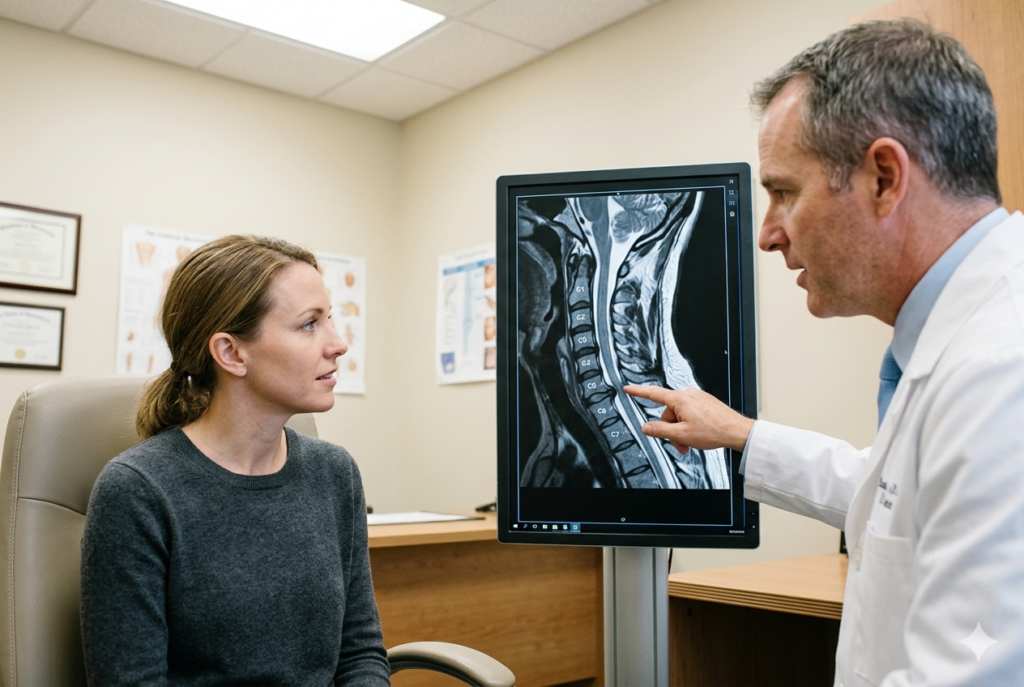
Serious Injuries from Huntington Car Accidents
Huntington's traffic volume and road complexity produce collisions across the full severity spectrum — from fender-benders to catastrophic multi-vehicle crashes. The following injuries are among those most frequently litigated by our attorneys in cases arising from Huntington.Traumatic Brain Injuries
The forces generated in high-speed crashes along Route 110 and at major Huntington intersections can cause traumatic brain injuries ranging from concussions with temporary symptoms to severe TBIs resulting in permanent cognitive impairment. Head trauma may occur from striking the steering wheel, window, or dashboard, or simply from the violent acceleration-deceleration forces that cause the brain to impact the inner skull without any external head contact.Herniated and Bulging Discs
Rear-end collisions in congested Huntington traffic frequently damage spinal discs. When a disc herniates, it protrudes into the spinal canal and compresses nerves, producing radiating pain, numbness, and weakness in the arms or legs. These injuries may require epidural steroid injections, physical therapy, or spinal fusion surgery. With proper documentation, disc herniations often meet the "significant limitation" threshold category.Fractures and Broken Bones
Side-impact collisions at Huntington's busy intersections commonly produce hip, pelvic, and leg fractures. Wrist and forearm fractures result from bracing against the dashboard. Facial bone fractures occur when airbags deploy with enough force to cause injury or when the head strikes the steering column. Every fracture automatically qualifies as a serious injury, providing a clear pathway to pursuing pain and suffering damages.Knee, Shoulder, and Joint Injuries
The sudden impact forces in a collision transmit through the body, tearing ligaments and damaging cartilage in joints. ACL and meniscus tears in the knee, rotator cuff tears in the shoulder, and labral tears in the hip are common. Surgical repair — often arthroscopic — is typically followed by months of physical therapy, producing extended periods of missed work and significant medical costs.Spinal Cord Injuries and Paralysis
Catastrophic collisions — multi-vehicle pileups on Route 110, high-speed head-on crashes, rollover accidents — can damage the spinal cord, potentially causing partial or complete paralysis. These injuries require emergency surgery, extended hospitalization, and lifelong medical management. The economic damages alone in spinal cord injury cases typically extend into millions of dollars.Internal Organ Damage
Blunt force impacts to the chest and abdomen can rupture the spleen, lacerate the liver, damage kidneys, or collapse a lung. Pedestrians struck by vehicles in Huntington's commercial core are especially vulnerable to internal injuries. These injuries may not show external signs and can become life-threatening without prompt diagnosis and treatment.Crush Injuries and Amputation
Collisions involving trucks, buses, or multiple vehicles can trap occupants inside vehicles, crushing extremities beyond surgical repair. Traumatic amputations and post-accident surgical amputations require prosthetics, extensive rehabilitation, and lifelong adaptive care. These injuries qualify under multiple serious injury categories including dismemberment and permanent loss of use.PTSD and Psychological Injuries
Surviving a violent car accident can produce lasting psychological injuries — PTSD, severe driving anxiety, panic attacks, depression, and insomnia. These conditions are recognized by New York courts as compensable injuries and can contribute to meeting the 90/180-day threshold category when they prevent the victim from performing their normal daily activities.
Who Bears Legal Responsibility
The negligent driver. A driver who runs a red light at Route 25A and New York Avenue, rear-ends you in congestion on Route 110, or makes an unsafe left turn on Jericho Turnpike can be held liable for your injuries through a negligence claim. To establish liability, you must demonstrate duty, breach, causation, and damages. Police accident reports, traffic camera footage from the village's commercial core, cell phone records, witness statements, and accident reconstruction analysis all contribute to building your case. An employer. Huntington's commercial activity generates significant commercial vehicle traffic — delivery trucks, company vans, rideshare vehicles. When an employee causes a crash while performing work duties, their employer may be vicariously liable under respondeat superior. Employer liability is significant because commercial insurance policies typically carry coverage of $1 million or more, far exceeding standard personal auto policy limits. Vehicle or parts manufacturers. Defective brakes, tires, airbags, seatbelts, or steering components that cause or worsen an accident give rise to strict product liability claims. You need not prove the manufacturer was negligent — only that the product was defective and the defect caused your injuries. Post-accident vehicle inspection and expert analysis can identify defects not visible at the scene. Government entities. The Town of Huntington maintains local roads. NYSDOT maintains state routes including Route 25A and Route 110. Suffolk County maintains county roads. When dangerous road conditions contribute to a crash — potholes, faded lane markings, broken traffic signals, inadequate lighting, poor road design — the responsible government entity may be liable. All government claims require a Notice of Claim within 90 days under GML § 50-e and suit within one year and 90 days under GML § 50-i. Bars and restaurants. Huntington village is known for its active dining and nightlife scene along Main Street and New York Avenue. Under ABC Law § 65, New York's Dram Shop Act, a licensed establishment that serves alcohol to a visibly intoxicated patron who then causes a car accident may be held liable. This creates an additional recovery source — especially important when the drunk driver has limited insurance. Vehicle owners. New York's permissive use doctrine allows claims against the registered owner of a vehicle when the owner permitted another person to drive and that person caused an accident, providing an additional insurance policy to pursue.Injured in a Huntington Car Accident?
Alonso Krangle LLP serves Huntington and communities throughout the Town of Huntington. Our consultations are free, and you pay nothing unless we win your case. Start Your Free Case Review — 800-403-6191How Accidents Happen and How New York Shares Fault
Huntington's crash patterns reflect its role as a commercial and commuter hub. Rear-end collisions dominate along Route 110 during rush hour when stop-and-go traffic leads to inattentive following. T-bone crashes occur at signalized intersections throughout the village, especially at the Route 25A/Route 110 junction and the Five Corners area. Pedestrian accidents are a persistent concern along Main Street where foot traffic to restaurants, shops, and the Paramount Theater mixes with vehicle traffic. Left-turn collisions on Jericho Turnpike — where drivers misjudge gaps in oncoming traffic — are a recurring problem near commercial plazas. Under CPLR § 1411, New York applies pure comparative negligence. This means your compensation is reduced by your percentage of fault, but you retain the right to recover at any fault level. If total damages are $450,000 and a jury finds you 20% at fault for following too closely, your recovery would be $360,000. This is significantly more favorable than the modified comparative negligence rules used in many other states, where exceeding 50% or 51% fault would bar recovery entirely.
Protecting Your Case After a Collision
- Call 911 and ensure a police report is filed. Law enforcement will document the scene, identify all drivers and witnesses, and record the responding officer's preliminary findings. This report becomes critical evidence in establishing fault and supporting your claim.
- Get medical care the same day — not tomorrow, not next week. Visit Huntington Hospital, an emergency room, or urgent care immediately. Many serious injuries do not produce immediate symptoms. Same-day medical records establish a clear causal link between the crash and your injuries that insurance companies will find difficult to dispute.
- Document the scene with your phone. Photograph vehicle damage, the intersection or road, traffic controls, road surface conditions, skid marks, and your visible injuries. In Huntington's commercial areas, look for nearby surveillance cameras that may have captured the collision — footage from businesses is typically overwritten within days.
- Submit your NF-2 form within 30 days. This form initiates your no-fault PIP benefits. The 30-day deadline under Insurance Law § 5103 is strictly enforced — missing it can result in complete loss of benefits regardless of the severity of your injuries.
- Do not provide a recorded statement to the other driver's insurer. You have no legal obligation to give one, and anything you say can be used to minimize your claim. Refer the adjuster to your attorney.
- Consult an attorney before accepting any settlement. Early offers from insurers are designed to resolve claims cheaply before the full extent of injuries is known. A car accident attorney evaluates all current and future damages to ensure any settlement offer is fair.
Damages You Are Entitled to Recover
Economic damages include all measurable financial losses: medical expenses exceeding PIP coverage (surgeries, hospitalization, rehabilitation, prescriptions, medical equipment, future care needs), lost wages, diminished future earning capacity, and vehicle repair or replacement costs. In severe injury cases, economic damages may include the cost of home modifications, in-home nursing care, and adaptive equipment needed for daily living. Non-economic damages compensate for the profound personal impact of your injuries. Physical pain and suffering, emotional distress and mental anguish, loss of enjoyment of life, permanent scarring and disfigurement, and loss of consortium are all compensable. New York places no cap on non-economic damages in personal injury cases, meaning there is no artificial ceiling on what a jury may award for these losses. Punitive damages may apply in rare cases of extreme misconduct — a severely intoxicated driver, a street racer, or someone who deliberately drove in a reckless manner showing total disregard for the safety of others. These damages serve to punish and deter. In wrongful death cases, EPTL § 5-4.1 permits recovery of funeral and burial expenses, lost financial support the deceased would have provided, and the family's loss of companionship and parental guidance. Where the at-fault driver's insurance is insufficient, your own UM/UIM coverage provides a critical supplemental source of compensation.How Insurance Companies Work Against You
Exploiting your vulnerability with early lowball offers. In the confusing aftermath of a crash — while you are dealing with pain, missed work, and mounting bills — an insurer may present a settlement offer that seems helpful. These offers are strategically timed to close your claim before the full scope of your injuries is known, and accepting one permanently eliminates your right to seek additional compensation. Using recorded interviews as claim-reduction tools. Adjusters conducting recorded statements are not gathering information to help you — they are building a file to minimize your payout. Every answer becomes evidence. Questions about pre-existing conditions, your activities since the accident, or your subjective assessment of your recovery all serve the insurer's agenda. Requesting unlimited access to your medical records. A blanket medical release lets the insurer review your entire health history, searching for prior injuries, complaints, or treatments they can use to argue that your current symptoms predate the accident. Only records directly related to the accident injuries should be disclosed. Seizing on any gap in medical treatment. If there is a break in your documented medical care — a missed appointment, a period without follow-up — the insurer will argue that you must not have been seriously injured. Maintaining consistent treatment is essential for both your health and your legal claim. Deploying defense medical examiners to contradict your doctors. The insurer's "independent" medical examination is neither independent nor thorough. Doctors who regularly perform these exams for insurance companies frequently produce reports minimizing injuries and recommending discharge from treatment. Your attorney can challenge these opinions with your treating physicians' records and independent expert evaluations.
Key Fact: Car accident victims who are represented by experienced attorneys consistently receive substantially higher compensation than those who negotiate with insurance companies without legal counsel. Insurers understand this — which is why they work hardest to settle claims before you retain a lawyer.
Statutory Deadlines for Filing
| Action | Deadline | Authority |
|---|---|---|
| Notify insurer / file NF-2 | 30 days | Ins. Law § 5103 |
| Personal injury lawsuit | 3 years | CPLR § 214 |
| Wrongful death lawsuit | 2 years | EPTL § 5-4.1 |
| Notice of Claim (government entity) | 90 days | GML § 50-e |
| Lawsuit against government entity | 1 year + 90 days | GML § 50-i |
| UM/UIM claim | 6 years (contract) | CPLR § 213 |
Government Entity Deadline Alert
If your accident involved a Town of Huntington vehicle, Suffolk County equipment, or a hazardous condition on a state road like Route 25A or Route 110, you must file a Notice of Claim within just 90 days of the accident. This compressed deadline is easily missed and failing to file in time will almost certainly bar your claim. Contact an attorney immediately after any accident potentially involving a government entity.Frequently Asked Questions
I was in a crash near the Five Corners intersection in Huntington — who is responsible for road safety there?
The Five Corners area involves the convergence of several roads, with maintenance responsibility split between the Town of Huntington for local roads and NYSDOT for state routes. If a road defect — such as a malfunctioning signal, worn pavement markings, or inadequate signage — contributed to your crash, the responsible government entity may share liability. Claims against the Town of Huntington or NYSDOT require a Notice of Claim within 90 days. Your attorney can investigate which entity bears responsibility and file the necessary paperwork immediately.
What is the serious injury threshold and do I meet it?
The serious injury threshold under Insurance Law § 5102(d) defines nine categories of injury that must be met before you can sue for pain and suffering in New York. Fractures automatically qualify. For other injuries — such as herniated discs, torn ligaments, or chronic pain — you need objective medical documentation proving a significant or permanent limitation. An attorney experienced in car accident cases can evaluate your medical records and advise whether your injuries meet the threshold.
What are the filing deadlines for a car accident case?
The no-fault NF-2 form must be filed within 30 days. Personal injury lawsuits have a three-year statute of limitations under CPLR § 214. Wrongful death claims have two years. Government entity claims require a 90-day Notice of Claim and a lawsuit within one year and 90 days. Even though the personal injury deadline is three years, starting early gives your attorney the best opportunity to preserve evidence.
What if the drunk driver who hit me had just left a Huntington bar?
Under the Dram Shop Act (ABC Law § 65), you may have a claim against both the drunk driver and the bar or restaurant that served them. If the establishment continued to serve alcohol to a person who was visibly intoxicated, and that person then drove and caused your injuries, the bar can be held legally liable. Huntington's restaurant and bar scene means dram shop claims are a realistic option in many alcohol-related accidents in the area.
Can I recover compensation if I share some fault for the accident?
Yes. New York's pure comparative negligence rule (CPLR § 1411) reduces your recovery by your share of fault but never eliminates it. You can recover at any fault percentage. If you are 45% at fault and total damages are $500,000, you would recover $275,000.
Does Alonso Krangle LLP charge for the initial consultation?
No. Your initial consultation is completely free. If we take your case, we work on a contingency fee basis — you pay no legal fees or costs unless we recover compensation on your behalf. There is zero financial risk in having us evaluate your claim.
What if I was hit as a pedestrian walking in Huntington village?
Pedestrians struck by vehicles in New York can pursue claims against the at-fault driver just as vehicle occupants can. Pedestrians are not subject to the serious injury threshold in the same way — they are not covered by no-fault insurance as vehicle occupants — so they can pursue claims for all damages including pain and suffering without meeting the threshold requirements. Pedestrian accidents in Huntington's commercial core often involve complex liability questions, especially when crosswalk visibility or signal timing may have been factors.
Will my car accident case go to trial?
Most car accident cases settle before trial — but preparing every case as though it will go to trial is what produces fair settlements. Insurance companies offer more when they know your attorney is willing and prepared to present your case to a jury. If a fair settlement cannot be reached through negotiation, Alonso Krangle LLP is prepared to try your case in Suffolk County Supreme Court.
What does a car accident lawyer actually do for me?
An experienced car accident attorney handles every aspect of your claim: investigating the accident, gathering evidence, filing insurance claims and legal documents, communicating with all insurers, retaining medical and accident reconstruction experts, calculating the full value of your damages (including future costs), negotiating with the insurance company, and if necessary, presenting your case at trial. This allows you to focus on your medical recovery while your legal rights are protected.
Related Resources
Speak with An Attorney
Submit This Form or Call 800-403-6191