

Northport
Northport is a historic North Shore village where narrow, winding roads and the heavily-trafficked Route 25A (Fort Salonga Road) create collision risks that many drivers underestimate. From rear-end crashes on Fort Salonga Road to loss-of-control accidents on curves near Northport Harbor, these collisions produce injuries that demand experienced legal representation. Alonso Krangle LLP represents Northport car accident victims and their families, working to secure the full compensation they deserve.

Collision Hazards on Northport Roads
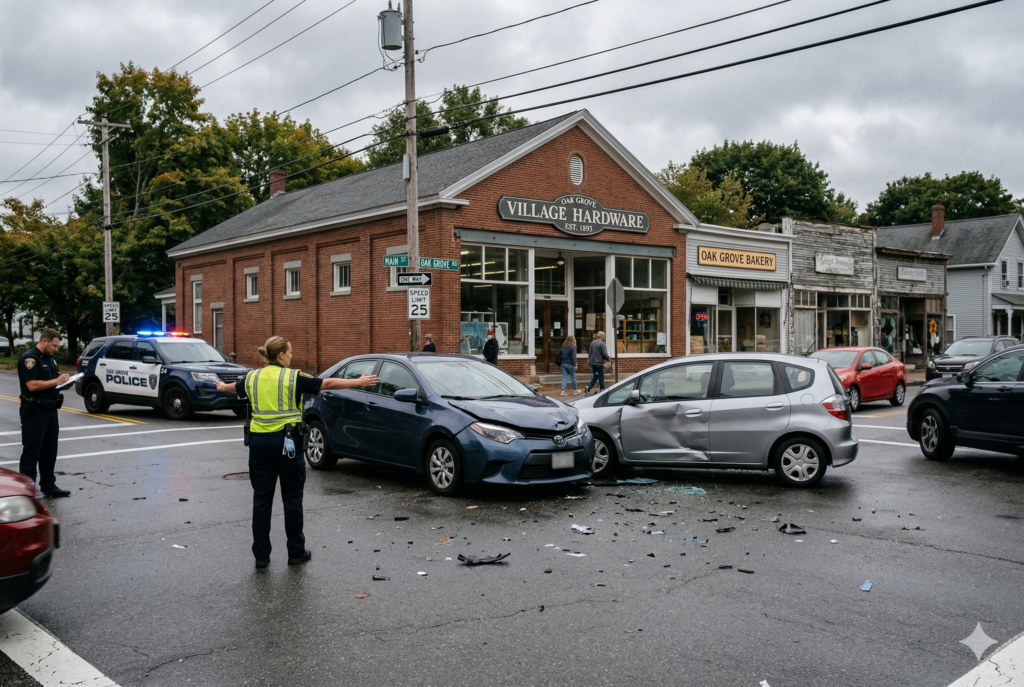
Northport is an incorporated village within the Town of Huntington in Suffolk County, situated on the North Shore of Long Island along Northport Harbor. Route 25A — known as Fort Salonga Road through Northport — runs east-west along the village's southern boundary, serving as the primary through-route connecting Huntington to the west and Kings Park to the east. This two-lane state highway carries heavy volumes of commuter and commercial traffic through a corridor with limited sight lines, narrow shoulders, and sharp curves that were designed decades ago for far less traffic. Fort Salonga Road's winding path through Northport and the neighboring hamlet of Fort Salonga is particularly treacherous. Drivers traveling at speed encounter blind curves where trees and terrain block visibility, residential driveways that feed directly into traffic without adequate acceleration lanes, and intersections with roads like Elwood Road, Vernon Valley Road, and Bread and Cheese Hollow Road where cross-traffic must merge into gaps between fast-moving vehicles. The transition from Huntington village — where Route 25A widens to four lanes — to the narrow two-lane configuration through Northport catches unfamiliar drivers off guard. Inside the village, Main Street, Woodbine Avenue, and Waterside Avenue see frequent traffic violations and collision reports. Suffolk County recorded 164 traffic fatalities in 2022, more than any other county in New York State. Statewide, motor vehicle fatalities reached their highest level in a decade that year, with 1,175 deaths. Route 25A is consistently cited among Long Island's most dangerous roads, with rear-end crashes as the dominant collision type. One in three fatal crashes on Long Island involve speeding, and one in three involve alcohol — risk factors amplified on the narrow, high-speed stretches of Fort Salonga Road.
Local Hazard: Route 25A (Fort Salonga Road) through Northport narrows from a four-lane road in Huntington to a two-lane road with minimal shoulders and blind curves. This transition produces dangerous speed differentials, with drivers maintaining highway speeds on a road that cannot safely accommodate them. Speeding is one of the most common violations documented by the Northport Village Police Department along this corridor.
Your No-Fault Insurance Benefits Explained
New York's no-fault insurance system, established under Insurance Law § 5102(a), requires every registered vehicle to carry Personal Injury Protection (PIP) coverage. When you are injured in a car accident, your PIP benefits pay regardless of who was at fault — a system designed to provide immediate financial relief while fault is sorted out through the legal process. Your PIP coverage provides up to $50,000 for three categories of expenses: necessary medical treatment obtained within one year of the accident, lost wages up to $2,000 per month for a maximum of three years, and incidental expenses at $25 per day for up to one year. Accessing these benefits requires filing the NF-2 application with your own auto insurer within 30 days of the accident, as required by Insurance Law § 5103. This deadline is strictly enforced — missing it can forfeit your right to PIP benefits entirely. The most important limitation of PIP coverage is what it does not provide: compensation for pain and suffering. No matter how severely a crash on Fort Salonga Road affects your quality of life, no-fault benefits will not pay for the physical agony, emotional distress, or lost enjoyment of daily activities caused by another driver's negligence. Recovering those damages requires meeting New York's serious injury threshold and filing a separate claim against the at-fault driver.What Counts as a Serious Injury in New York
To pursue a lawsuit for pain and suffering after a New York car accident, your injuries must meet the "serious injury" standard defined in Insurance Law § 5102(d). This threshold exists because the no-fault system was designed to handle minor accident claims through PIP benefits alone, reserving the court system for cases involving genuine, significant harm. The law defines nine qualifying categories: death; dismemberment; significant disfigurement; fracture; loss of a fetus; permanent loss of use of a body organ, member, function, or system; permanent consequential limitation of use of a body organ or member; significant limitation of use of a body function or system; and a medically determined injury preventing the person from performing substantially all of their customary daily activities for 90 of the first 180 days after the accident. A fracture of any kind — whether a simple stress fracture or a compound break requiring surgical fixation — automatically satisfies the threshold. The "limitation" categories are more complex to prove. For soft tissue injuries such as herniated discs, torn rotator cuffs, or chronic pain syndromes, you need objective medical documentation: diagnostic imaging (MRI, CT scans), quantified range-of-motion testing, nerve conduction studies, and medical opinions connecting the injury to the accident and establishing its permanence or severity. Insurance companies aggressively contest these claims through their own defense medical examiners, making thorough documentation from the first day of treatment essential.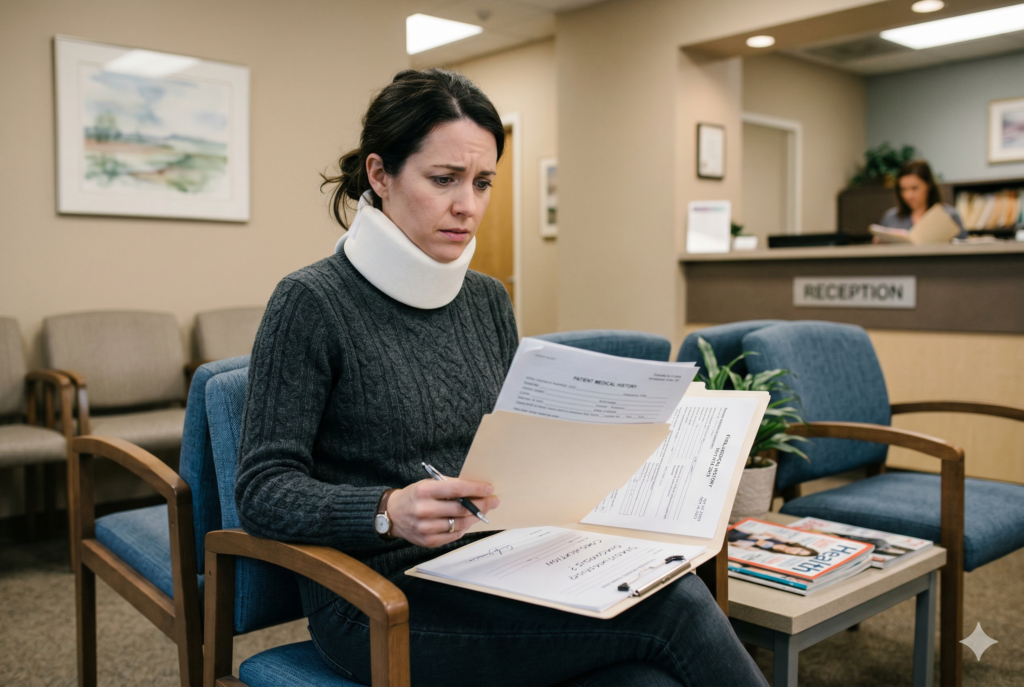
Injuries Resulting from Northport Crashes
The collision dynamics on Northport's roads — head-on crashes on Fort Salonga Road's curves, rear-end impacts at village intersections, loss-of-control accidents on wet or leaf-covered surfaces — produce injuries that range from recoverable to permanently disabling.Whiplash and Cervical Injuries
Rear-end collisions along Fort Salonga Road are a leading cause of whiplash in Northport. The sudden acceleration-deceleration forces snap the head forward and back, damaging muscles, ligaments, and cervical discs. Chronic whiplash can produce lasting pain, headaches, and reduced neck mobility that persists for years. When documented with objective findings, severe whiplash injuries can satisfy the serious injury threshold.Traumatic Brain Injuries
Head-on collisions on Fort Salonga Road's curves and utility pole impacts generate forces capable of causing traumatic brain injuries ranging from mild concussions to severe diffuse axonal injuries. TBIs can produce lasting cognitive impairment, memory problems, personality changes, and an inability to concentrate. Even injuries classified as "mild" can fundamentally alter a person's ability to work and function normally.Fractures and Broken Bones
Single-vehicle crashes into utility poles and trees along Northport's narrow roads frequently cause multiple fractures — broken arms, wrists, ribs, collarbones, and facial bones. Multi-vehicle collisions at intersections produce hip and pelvic fractures from side impacts. Any fracture automatically satisfies the serious injury threshold under New York law, clearing the path for a full pain and suffering claim.Herniated and Bulging Discs
The compressive and rotational forces in a collision can rupture or displace spinal discs, pressing them against adjacent nerves. Herniated discs cause radiating pain, numbness, and muscle weakness that can limit the ability to work, exercise, and perform basic household tasks. MRI confirmation combined with documented functional limitations often meets the "significant limitation" or "permanent consequential limitation" categories of the threshold.Spinal Cord Injuries and Paralysis
High-energy collisions — head-on crashes, rollovers on curves, impacts with fixed objects — can damage the spinal cord, producing partial or complete paralysis. Spinal cord injuries require emergency surgical intervention and typically result in permanent disability necessitating lifelong medical care, adaptive equipment, home modifications, and personal assistance.Burns and Disfigurement
Vehicle fires, contact with hot mechanical components, and chemical burns from airbag deployment can produce serious burn injuries. Facial lacerations from shattered windshield glass and deep abrasions from seatbelt friction cause permanent scarring. Significant disfigurement is its own standalone category of serious injury under New York law, independent of any functional limitation.Internal Organ Damage
Blunt trauma from steering wheel impacts, seatbelt compression, and side-panel intrusion can cause internal injuries — ruptured spleens, liver lacerations, kidney damage, and collapsed lungs. These injuries may not present obvious symptoms at the scene, making immediate medical evaluation critical. Delayed diagnosis of internal injuries can be life-threatening.Torn Ligaments and Soft Tissue Injuries
ACL, MCL, and meniscus tears in the knee, rotator cuff injuries in the shoulder, and labral tears in the hip frequently result from the violent forces of a car crash. These injuries typically require surgical repair — often arthroscopic procedures — followed by months of physical therapy. The extended recovery period generates substantial medical expenses and prolonged lost wages.Parties Who May Owe You Compensation
The at-fault driver. A driver who speeds through Fort Salonga Road's curves, fails to yield at a village intersection, tailgates in congested traffic, or texts while driving can be held liable for injuries they cause. Establishing negligence requires showing the driver owed a duty of care, breached that duty, and that the breach directly caused the accident and your injuries. Police reports, witness testimony, dashcam footage, cell phone records, and accident reconstruction analysis all serve as evidence. An employer. When a crash involves a driver operating a vehicle for work — a delivery truck, commercial van, company car, or rideshare vehicle on an active trip — the employer may bear vicarious liability under respondeat superior. Commercial policies typically carry coverage limits of $1 million or more, providing substantially greater compensation potential than a standard personal auto policy. Vehicle or parts manufacturers. Defective brakes, tires, airbags, steering systems, or structural components that cause or worsen a crash give rise to strict product liability claims. The manufacturer can be held liable without proving negligence — you must show only that the product was defective and the defect caused your injuries. Expert analysis of the vehicle wreckage can identify defects not visible at the scene. Government entities. Roads in Northport are maintained by multiple government entities. Village streets are the responsibility of the Village of Northport. Fort Salonga Road (Route 25A) is maintained by NYSDOT. County roads in the surrounding area fall under Suffolk County. When poor road conditions, defective guardrails, missing signage, or inadequate lighting contribute to a crash, the responsible entity may share liability. Government claims require a Notice of Claim within 90 days under GML § 50-e and a lawsuit filed within one year and 90 days under GML § 50-i. Alcohol vendors. Under ABC Law § 65, a bar, restaurant, or liquor store that serves alcohol to a visibly intoxicated person can be held liable when that person causes a drunk driving accident. Northport village has numerous dining and drinking establishments along Main Street, making dram shop claims a real possibility in alcohol-related crashes. Vehicle owners. Under New York's permissive use doctrine, the registered owner of a vehicle may be liable when the driver they permitted to use the car causes an accident. This provides an additional source of insurance coverage even if the at-fault driver has limited coverage.Injured in a Car Accident in Northport?
Alonso Krangle LLP represents car accident victims throughout Northport and the Town of Huntington. Our consultations are free and we charge no fees unless we recover for you. Call 800-403-6191 for Your Free Consultation
How Crashes Happen in Northport and How Fault Is Shared
Northport's crash profile reflects its geography. Head-on collisions occur on Fort Salonga Road's blind curves when drivers cross the center line while navigating turns. Rear-end crashes happen when traffic stops suddenly at village intersections and drivers coming from the more open stretches of Route 25A cannot stop in time. T-bone accidents occur at Main Street and Woodbine Avenue and at other village crossings with limited visibility. Single-vehicle crashes into utility poles and trees are common on Fort Salonga Road, especially during rain, fog, or fall leaf season when pavement becomes slippery. New York's pure comparative negligence rule under CPLR § 1411 ensures that partial fault does not eliminate your right to compensation. If a jury finds total damages of $275,000 but assigns you 30% fault — perhaps for exceeding the posted speed by a few miles per hour — your recovery would be $192,500. Unlike states that bar recovery when a plaintiff's fault exceeds 50% or 51%, New York allows recovery at any fault level, with the award reduced proportionally.Essential Steps After a Car Accident
- Report the accident to police. Call 911 so responding officers can document the scene, identify all parties and witnesses, and create an official accident report. In the Village of Northport, the Northport Village Police Department responds to crashes within village limits.
- Seek immediate medical care. Go to the emergency room or urgent care the day of the accident. Injuries including concussions, internal bleeding, and disc herniations may not produce symptoms for hours or days. Medical records from the day of the crash establish a direct connection between the collision and your injuries.
- Photograph the scene and your injuries. Capture vehicle damage, road conditions, traffic signals or signs, skid marks, and any visible injuries. On narrow roads like Fort Salonga Road, also photograph sight lines, shoulder width, and any obstructions that may have contributed to the crash.
- File your NF-2 within 30 days. Submit the no-fault benefits application to your own auto insurer promptly. Missing this absolute deadline forfeits your right to PIP coverage for medical bills and lost wages — regardless of who caused the accident.
- Refuse recorded statements from the opposing insurer. The at-fault driver's insurance company may contact you quickly after the accident. You have no obligation to provide a recorded statement, and doing so without an attorney present creates risks that statements will be used to undermine your claim.
- Talk to a car accident attorney before accepting any offer. Early settlement offers are calculated to close your claim for as little as possible. An attorney evaluates the full scope of your injuries, future treatment needs, and lifetime earning impacts before advising whether any offer is fair.
The Full Range of Recoverable Damages
Economic damages compensate for every financial loss the accident caused. This includes medical expenses beyond your $50,000 PIP cap — surgeries, specialist consultations, imaging, rehabilitation, prescription costs, and projected future care needs. Lost wages for time missed from work, reduced earning capacity if injuries prevent you from returning to your former occupation, and property damage to your vehicle and personal belongings are also economic damages. Non-economic damages address the human suffering that no dollar figure can fully capture. Physical pain and suffering, emotional distress, loss of enjoyment of life, permanent disfigurement or scarring, and loss of consortium (the impact on your spousal relationship) are all compensable. New York imposes no statutory cap on non-economic damages in car accident cases, meaning recovery is limited only by the facts of your case and the jury's assessment of your suffering. Punitive damages apply only to the most egregious cases — severe intoxication, street racing, intentional recklessness. They are designed to punish outrageous conduct and deter similar behavior, not to compensate the victim directly. If a crash results in death, EPTL § 5-4.1 allows the estate to recover funeral costs, lost financial support, and compensation for the family's loss of companionship. Uninsured/underinsured motorist (UM/UIM) coverage on your own policy can supplement recovery when the at-fault driver's policy limits are insufficient.
Insurance Company Strategies to Watch For
Rushing you into a quick settlement. Within days of a crash, the at-fault driver's insurer may present an offer designed to close your claim before the full extent of your injuries becomes clear. These offers rarely account for future medical costs, long-term pain, or reduced earning potential. Accepting permanently waives your right to seek additional compensation. Twisting your recorded statements. Insurance adjusters conduct recorded interviews looking for statements they can use against you — admissions of even partial fault, descriptions that minimize symptoms, or inconsistencies between your account and medical records. A simple "I'm doing okay" can be quoted to argue you are not seriously injured. Seeking blanket access to your medical history. Insurers request overbroad medical authorizations to scour your records for pre-existing conditions — prior back pain complaints, old knee injuries, mental health treatment — that they can blame for your current symptoms, even when those conditions were asymptomatic or resolved before the accident. Exploiting treatment gaps. Any period without documented medical treatment — even a week between appointments — becomes evidence, in the insurer's argument, that your injuries were not serious. Consistently following your doctor's prescribed treatment plan protects both your health and your case. Arranging defense medical exams that understate your injuries. Insurers may schedule an "independent" medical examination with a doctor they regularly hire. These examiners frequently produce reports minimizing injuries, claiming full recovery, or attributing symptoms to pre-existing conditions. Your attorney can prepare you for the exam and retain independent medical experts to counter biased opinions.
Key Fact: Accident victims who retain legal representation consistently recover significantly more compensation than those who negotiate with insurance companies alone. Insurance adjusters know this, which is why they often try to settle quickly — before you speak with an attorney.
Time Limits for Legal Action
| Action | Deadline | Authority |
|---|---|---|
| Notify insurer / file NF-2 | 30 days | Ins. Law § 5103 |
| Personal injury lawsuit | 3 years | CPLR § 214 |
| Wrongful death lawsuit | 2 years | EPTL § 5-4.1 |
| Notice of Claim (government entity) | 90 days | GML § 50-e |
| Lawsuit against government entity | 1 year + 90 days | GML § 50-i |
| UM/UIM claim | 6 years (contract) | CPLR § 213 |
Government Vehicle Deadline
If your crash involved a Village of Northport vehicle, a Town of Huntington vehicle, Suffolk County equipment, or a hazardous condition on Route 25A (Fort Salonga Road) maintained by NYSDOT, you must file a Notice of Claim within just 90 days. This deadline is far shorter than the standard statute of limitations and missing it will almost certainly bar your claim permanently.Frequently Asked Questions
I lost control on a curve on Fort Salonga Road in Northport and hit a tree — can I still file a claim?
Potentially, yes. If the road condition contributed to your crash — such as inadequate curve warning signs, lack of guardrails, poor drainage causing standing water, or fallen debris — the government entity responsible for maintaining the road may share liability. Route 25A (Fort Salonga Road) is maintained by NYSDOT. Your attorney would investigate whether the road design or maintenance fell below acceptable safety standards. A government claim requires filing a Notice of Claim within 90 days.
What does it mean to meet the serious injury threshold?
Under Insurance Law § 5102(d), New York restricts car accident lawsuits for pain and suffering to cases involving "serious injury." This includes any bone fracture, significant disfigurement, dismemberment, permanent loss or limitation of use, and injuries preventing substantially all normal daily activities for 90 of 180 days. If your injury falls into one of these nine categories, you can pursue compensation beyond what no-fault PIP covers.
How long do I have to file a car accident lawsuit?
Personal injury lawsuits must be filed within three years of the accident under CPLR § 214. Wrongful death claims have a two-year deadline. Claims against government entities (Village of Northport, Town of Huntington, NYSDOT) require a Notice of Claim within 90 days and a lawsuit within one year and 90 days. Acting early preserves evidence and strengthens your case.
Can I recover damages if I was partly at fault for the crash?
Yes. Under CPLR § 1411, New York uses pure comparative negligence, which reduces your recovery by your percentage of fault but never eliminates it entirely. If you are found 40% responsible and total damages are $300,000, you would still recover $180,000. This makes New York more favorable to injured parties than states that bar recovery once fault exceeds a certain percentage.
What compensation is available in a car accident case?
If you meet the serious injury threshold, you can pursue economic damages (medical expenses beyond PIP, lost wages, diminished earning capacity, property damage), non-economic damages (pain and suffering, emotional distress, loss of enjoyment of life, disfigurement), and in extreme cases, punitive damages. New York places no cap on non-economic damages.
What does Alonso Krangle LLP charge for a car accident case?
Nothing upfront. We handle car accident cases on a contingency fee basis — you pay no attorney's fees or costs unless we recover compensation for you. The initial consultation is always free.
Does the serious injury threshold apply to motorcycle accidents?
No. Motorcycles are excluded from New York's no-fault system, so the serious injury threshold does not apply to motorcycle accident claims. Motorcyclists injured in crashes can pursue lawsuits for all damages — including pain and suffering — without meeting the threshold. However, motorcyclists also do not have PIP coverage, making the liability claim against the at-fault driver even more critical for covering medical expenses.
What evidence should I preserve after a truck accident?
In addition to standard accident evidence (photos, police report, medical records), truck accident cases benefit from preserving the truck driver's hours-of-service logs, the truck's electronic data recorder (black box) data, the carrier's maintenance records, and the driver's employment and training records. These must be requested quickly because federal regulations only require carriers to retain certain records for limited periods. Your attorney can send a preservation letter to the trucking company demanding they retain all relevant evidence.
How long will my car accident case take?
Timelines vary significantly based on the severity of injuries, the number of parties involved, and whether the case settles or goes to trial. Straightforward cases with clear liability and established injuries may resolve in months. Complex cases involving multiple defendants, disputed fault, or catastrophic injuries that require extended treatment may take two years or more. Your attorney can give you a realistic timeline once they evaluate the specifics of your case.
Related Resources
Speak with An Attorney
Submit This Form or Call 800-403-6191