

South Huntington
South Huntington sits astride two of Long Island's most dangerous roads — Route 110 (New York Avenue) and Jericho Turnpike (Route 25) — where commuter congestion, commercial vehicle traffic, and high-speed travel produce a relentless stream of serious collisions. The Walt Whitman Shops area and the Route 110/Jericho Turnpike intersection are among the highest-crash locations on Long Island. Alonso Krangle LLP represents South Huntington car accident victims, pursuing every dollar of compensation their injuries warrant.
High-Crash Roads Through South Huntington
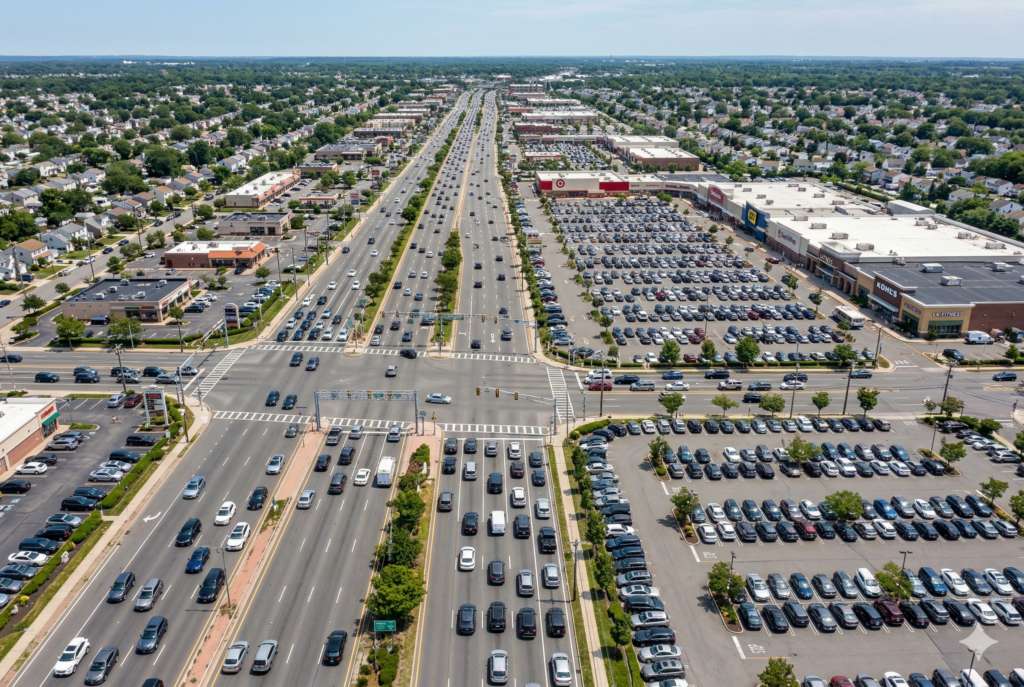
South Huntington is an unincorporated hamlet within the Town of Huntington in Suffolk County. Route 110 (New York Avenue) runs north-south through the community, connecting Melville's corporate corridor to the south with Huntington village to the north. As Route 110 passes through South Huntington, it expands from a one-lane village road into a multi-lane divided highway lined with shopping centers, restaurants, and the Walt Whitman Shops — one of Long Island's largest retail destinations. Jericho Turnpike (Route 25) crosses Route 110 in the heart of South Huntington, creating one of the busiest and most collision-prone intersections on Long Island. Route 110 has the highest rate of fatal crashes among surface roads in Suffolk County. The road's transition between different speed environments — single-lane village streets to multi-lane highway — catches drivers off guard. Aggressive lane changes near the Walt Whitman Shops entrance, rear-end pileups during rush hour, and pedestrian strikes in parking lot access areas are all regular occurrences. Jericho Turnpike through the area is classified as one of the most dangerous east-west routes on Long Island, with heavy traffic, frequent signals, and commercial driveways creating constant conflict points. The intersection of Jericho Turnpike and Route 110 records over 200 accidents per year. Suffolk County recorded 164 traffic fatalities in 2022, the highest of any county in New York State. Traffic deaths across Long Island have risen approximately 40% since 2019, with crashes growing more severe even as total miles driven declined. One in three fatal crashes involve speeding, and one in three involve alcohol. Nassau and Suffolk counties combined average 83 fatal or injury-causing accidents per day.
Local Data: Route 110 carries the highest rate of fatal crashes among Suffolk County surface roads, and its intersection with Jericho Turnpike in South Huntington reports over 200 accidents annually — one of the highest collision volumes of any intersection on Long Island. Community residents have advocated for a $10 million traffic safety initiative focused on Route 110 and Pulaski Road to address the ongoing crash frequency.
How PIP Benefits Work After an Accident
New York requires every registered vehicle to carry Personal Injury Protection (PIP) under Insurance Law § 5102(a). When you are hurt in a car accident, your own auto insurer pays PIP benefits irrespective of fault. This provides immediate financial support for your most pressing expenses while fault is resolved through the legal system. PIP coverage is capped at $50,000 and covers reasonable medical expenses for treatment within one year of the accident, lost wages up to $2,000 per month for a maximum of three years, and other reasonable expenses at $25 per day for one year. You must file the NF-2 application with your insurer within 30 days under Insurance Law § 5103. Filing even one day late can forfeit your entire PIP entitlement. The no-fault system provides no compensation whatsoever for pain and suffering. If a rear-end crash near the Walt Whitman Shops leaves you with a herniated disc and six months of debilitating back pain, PIP pays your medical bills and a portion of your lost wages — but nothing for the pain itself, the sleepless nights, or the activities you can no longer do. Recovering those non-economic damages requires meeting the serious injury threshold and pursuing a separate legal claim against the driver who caused the crash.Proving Your Injury Meets the Serious Injury Standard
Under Insurance Law § 5102(d), you must demonstrate that your injury qualifies as "serious" before you can sue for pain and suffering in New York. The statute defines nine qualifying categories that serve as a gatekeeping mechanism, reserving lawsuits for injuries that go beyond what PIP benefits were designed to address. The categories are: death; dismemberment; significant disfigurement; fracture; loss of a fetus; permanent loss of use of a body organ, member, function, or system; permanent consequential limitation of use of a body organ or member; significant limitation of use of a body function or system; and a medically determined injury that prevents the victim from performing substantially all of their usual daily activities for at least 90 of the first 180 days following the accident. Any bone fracture automatically satisfies the threshold with no additional documentation needed beyond the diagnosis. The "limitation" categories require building a robust medical record: MRI and CT imaging confirming the anatomical injury, quantified range-of-motion deficits measured against normal values, nerve conduction studies where applicable, and expert medical opinions linking the injury to the accident and characterizing its severity or permanence. Insurance companies use defense medical examiners to challenge these claims, making comprehensive documentation from your very first treatment session the most important step in protecting your legal rights.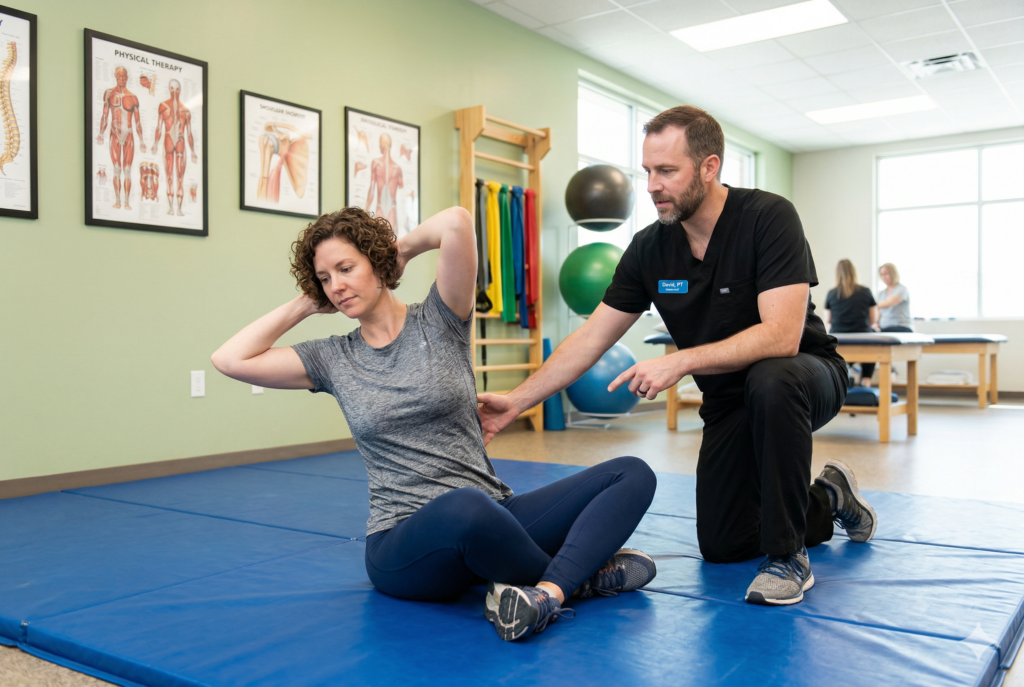
Injuries That Result from South Huntington Crashes
The crash patterns along Route 110 and Jericho Turnpike — high-speed rear-end collisions, broadside impacts at intersections, pedestrian strikes near shopping centers, commercial vehicle accidents — produce a broad spectrum of serious injuries.Herniated and Bulging Discs
Rear-end collisions — the dominant crash type on congested Route 110 — transmit violent deceleration forces through the spine, compressing or rupturing intervertebral discs. The displaced disc material presses on spinal nerves, producing pain that radiates into the arms or legs, numbness, tingling, and muscle weakness. These injuries may require epidural injections, prolonged physical therapy, or spinal fusion surgery. When properly documented, disc injuries frequently satisfy the "significant limitation" or "permanent consequential limitation" threshold categories.Traumatic Brain Injuries
High-speed impacts on Route 110 and Jericho Turnpike generate the forces needed to cause traumatic brain injuries — from mild concussions producing headaches and concentration difficulties to severe TBIs that permanently impair cognitive function, memory, and the ability to work. Brain injuries can occur without direct head contact, from the rotational forces that cause the brain to shift inside the skull during sudden deceleration.Fractures and Broken Bones
T-bone collisions at the Route 110 and Jericho Turnpike intersection produce hip, pelvic, and rib fractures on the impact side. Wrist and forearm fractures come from bracing against the dashboard. Complex fractures may require surgical repair with plates, screws, or rods. Every fracture automatically meets the serious injury threshold under New York law.Spinal Cord Injuries and Paralysis
Catastrophic crashes on Route 110 — multi-vehicle pileups, commercial truck collisions, rollover accidents — can damage the spinal cord, causing permanent paraplegia or quadriplegia. These injuries demand emergency surgery, extended ICU stays, and lifelong medical management including wheelchairs, home modifications, and personal care. The lifetime cost of a spinal cord injury routinely reaches millions of dollars.Knee, Shoulder, and Joint Injuries
Dashboard impacts tear knee ligaments — ACL, MCL, and meniscus injuries are common when the knee strikes the lower dashboard during a collision. Shoulder injuries including rotator cuff tears occur when the body is thrown against the seatbelt or door. These injuries typically require arthroscopic surgery and months of physical therapy, generating significant medical bills and extended periods away from work.Internal Organ Damage
Seatbelt compression, steering wheel impacts, and side-panel intrusions can cause internal injuries that may not show external signs — ruptured spleens, liver lacerations, kidney damage, and collapsed lungs. Pedestrians struck by vehicles near shopping center entrances are especially vulnerable to internal trauma. Same-day emergency evaluation is essential after any significant collision.Whiplash and Cervical Injuries
The sudden forward-backward snapping of the neck in a rear-end crash damages cervical muscles, ligaments, and discs. While sometimes dismissed as a minor complaint, chronic whiplash can produce lasting neck pain, persistent headaches, dizziness, and significantly reduced range of motion. When documented with objective clinical findings, severe whiplash injuries can meet the serious injury threshold.PTSD and Psychological Injuries
Surviving a violent crash can cause post-traumatic stress disorder, severe driving anxiety, panic attacks, depression, and insomnia. These psychological injuries are compensable under New York law and may contribute to meeting the 90/180-day threshold category when they prevent you from performing substantially all of your customary daily activities. Psychiatric or psychological treatment records are essential documentation.
Determining Who Is Legally Responsible
The negligent driver. A driver who rear-ends you in Route 110 rush-hour traffic, runs a red light at Jericho Turnpike, makes an unsafe lane change near the Walt Whitman Shops, or texts while driving can be held liable through a negligence claim. Police reports, traffic camera footage, surveillance video from shopping center security systems, cell phone records, and eyewitness testimony build the evidence needed to establish the driver's breach of duty. An employer. Route 110's commercial corridor generates heavy delivery and commercial vehicle traffic. When a truck driver, delivery worker, or any employee causes a crash during work duties, their employer may be vicariously liable under respondeat superior. Commercial insurance policies typically carry $1 million or more in coverage — often the only way to obtain adequate compensation in catastrophic injury cases. Vehicle or parts manufacturers. Defective brakes, tires, airbags, seatbelts, or other components that cause or worsen an accident give rise to strict product liability claims against the manufacturer. No proof of negligence is needed — only that the product was defective and the defect caused your injuries. Government entities. The Town of Huntington maintains local South Huntington roads. NYSDOT maintains Route 110 (New York Avenue) and Jericho Turnpike (Route 25). Suffolk County maintains county roads. When dangerous road conditions — potholes, broken traffic signals, faded lane markings, poor intersection design — contribute to a crash, the responsible entity may share liability. All government claims require a Notice of Claim within 90 days under GML § 50-e and a lawsuit within one year and 90 days under GML § 50-i.Alcohol vendors. Under ABC Law § 65, bars and restaurants that serve alcohol to visibly intoxicated patrons who then cause drunk driving crashes can be held liable for the resulting injuries. Vehicle owners. Under the permissive use doctrine, the registered owner of a vehicle may be liable when they allow another person to drive and that person causes an accident.Injured in a Car Accident in South Huntington?
Alonso Krangle LLP is based just minutes away in Melville and represents accident victims throughout South Huntington and Suffolk County. Free consultations — no fees unless we win. Call 800-403-6191 for a Free Case Evaluation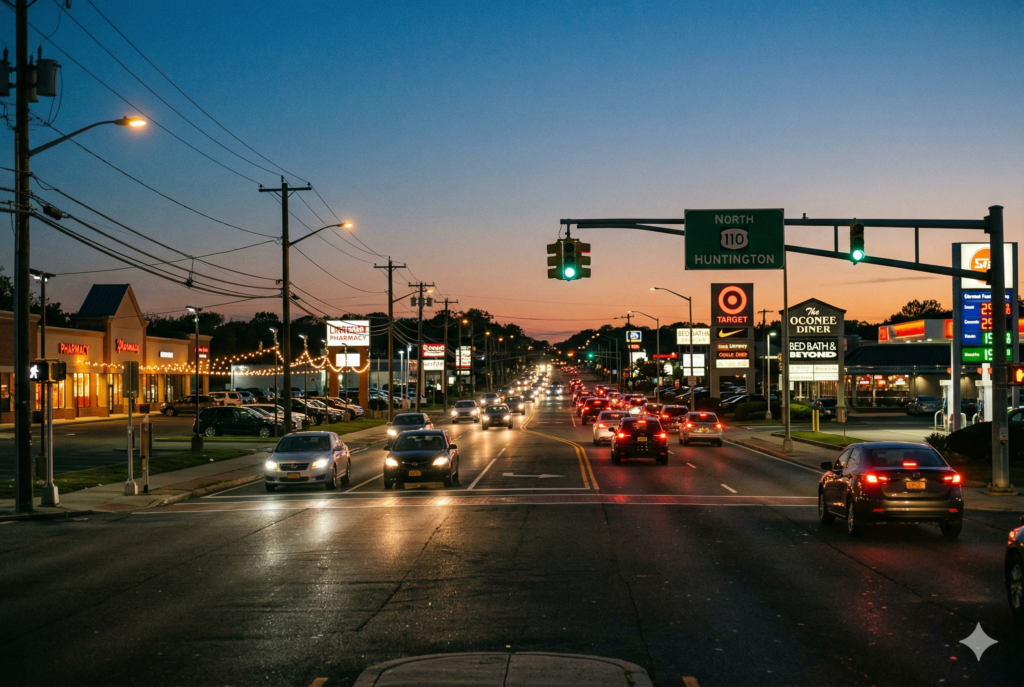
Crash Types and How New York Allocates Fault
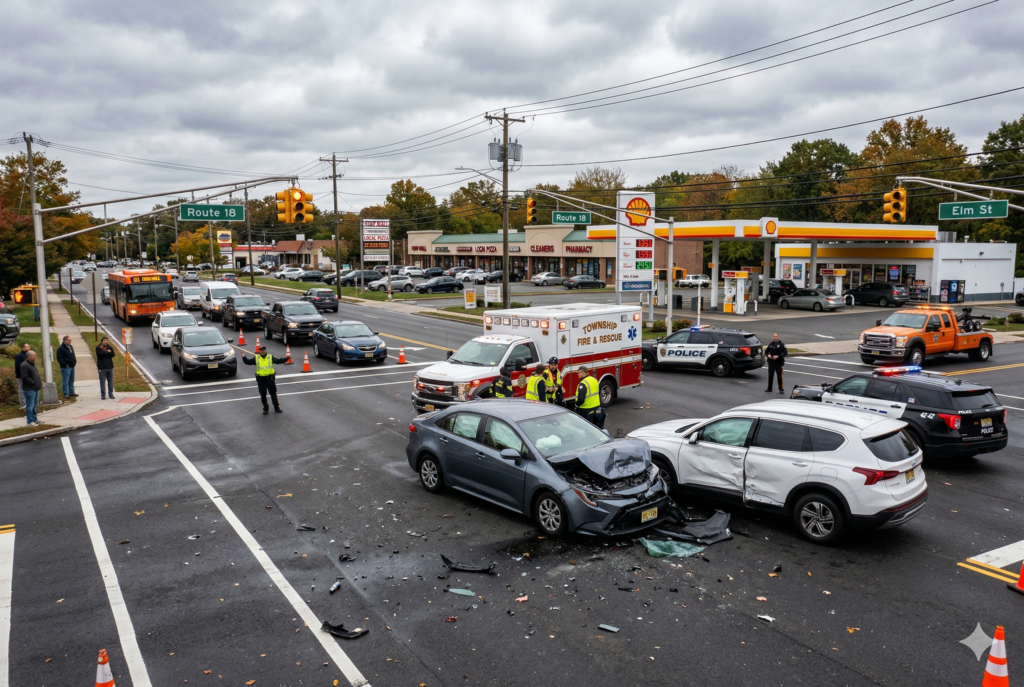
South Huntington's crashes follow patterns dictated by its two dominant corridors. On Route 110, rear-end chain reactions during rush hour are the most frequent crash type, caused by abrupt speed changes as traffic alternates between highway-speed and congested-signal conditions. T-bone collisions at the Jericho Turnpike intersection involve drivers misjudging signal timing or running late-yellow lights. Pedestrian accidents occur in shopping center access areas, bus stops, and crosswalks along Route 110 where foot traffic mixes with multi-lane vehicle traffic. Left-turn crashes on Jericho Turnpike result from drivers crossing traffic to enter commercial driveways. New York's pure comparative negligence rule under CPLR § 1411 means your compensation is reduced by your percentage of fault but is never eliminated. If a jury finds total damages of $525,000 and determines you were 15% at fault for following too closely, your recovery would be $446,250. Unlike states using a 50% or 51% bar, New York allows recovery at any fault level.Steps That Protect Your Health and Your Claim
- Call 911 and request police response. The police accident report documents the scene, identifies parties and witnesses, and records the officer's preliminary observations. This report is foundational evidence in any car accident claim.
- Seek medical attention the same day. Visit the emergency room or urgent care immediately. Delayed-onset injuries — concussions, disc herniations, internal bleeding — may not produce symptoms for hours or days. Same-day medical records create a critical causal link between the crash and your injuries.
- Photograph the scene and note any surveillance cameras. Capture vehicle damage, road conditions, traffic signals, skid marks, and injuries. Near the Walt Whitman Shops and Route 110 commercial areas, shopping center security cameras may have recorded the collision — note their locations so your attorney can request the footage before it is overwritten.
- File the NF-2 within 30 days. This absolute deadline activates your PIP benefits. Contact your auto insurer and submit the completed form promptly — late filings are routinely denied.
- Do not give a recorded statement to the opposing insurer. The at-fault driver's insurance company has no legal right to your recorded statement, and providing one without an attorney creates significant risk that your words will be used against you.
- Speak with an attorney before accepting any settlement. Insurers rush early offers precisely because they know the true value of your claim is far higher. An experienced car accident attorney evaluates the full scope of damages — including future medical needs and long-term impacts — before advising on any offer.
Recovering the Full Value of Your Damages
Economic damages encompass all quantifiable financial losses: medical expenses exceeding PIP (surgeries, hospitalizations, specialist care, rehabilitation, future treatment projections), lost wages, diminished earning capacity, and property damage. In catastrophic cases, economic damages include home modifications, adaptive equipment, and lifelong personal care. Non-economic damages compensate for physical pain and suffering, emotional distress, loss of enjoyment of life, permanent disfigurement, and loss of consortium. New York places no statutory cap on non-economic damages in car accident cases — the amount is determined by the severity and permanence of the injury and the jury's assessment of the victim's suffering. Punitive damages are reserved for extreme misconduct — severely intoxicated driving, street racing, or willful disregard for safety. They serve to punish and deter. In wrongful death cases, EPTL § 5-4.1 allows recovery of funeral costs, lost financial support, and the family's loss of companionship and guidance. UM/UIM coverage on your own policy supplements recovery when the at-fault driver's insurance is insufficient.How Insurers Try to Pay You Less Than You Deserve
Pushing quick, inadequate settlements. Within days of a crash, the at-fault driver's insurer may present a settlement designed to close your claim before the full extent of your injuries is known. These offers are virtually always well below the true value of the case. Accepting one permanently waives your right to additional compensation. Using your own recorded words against you. Adjusters conduct recorded interviews looking for statements they can use to reduce your payout — admissions of partial fault, symptom minimization, inconsistencies with medical records. Everything becomes part of the permanent claim file. Searching your medical history for pre-existing conditions. Overbroad medical authorizations let insurers comb through years of records for any prior complaint they can blame for your current symptoms — even if those conditions were fully resolved before the accident. Pointing to treatment gaps as proof of minor injuries. Any period without documented treatment becomes ammunition for the insurer. Following your doctor's recommended treatment plan consistently is critical for both recovery and legal purposes. Deploying defense medical examiners. Insurers schedule exams with doctors who regularly produce reports minimizing injuries. Your attorney can prepare you for these exams and retain independent experts to counter biased findings.
Key Fact: Accident victims who retain experienced legal counsel consistently recover substantially higher compensation than those who handle claims on their own. Alonso Krangle LLP's Melville office is minutes from South Huntington, allowing us to investigate crashes and secure evidence quickly.
Important Filing Deadlines
| Action | Deadline | Authority |
|---|---|---|
| Notify insurer / file NF-2 | 30 days | Ins. Law § 5103 |
| Personal injury lawsuit | 3 years | CPLR § 214 |
| Wrongful death lawsuit | 2 years | EPTL § 5-4.1 |
| Notice of Claim (government entity) | 90 days | GML § 50-e |
| Lawsuit against government entity | 1 year + 90 days | GML § 50-i |
| UM/UIM claim | 6 years (contract) | CPLR § 213 |
Government Entity Deadline
If your accident involved a Town of Huntington vehicle, Suffolk County equipment, or a hazardous condition on Route 110, Jericho Turnpike, or any other government-maintained road, you must file a Notice of Claim within 90 days. This deadline is far shorter than the standard statute of limitations and missing it will almost certainly destroy your claim.Frequently Asked Questions
I was rear-ended in traffic near the Walt Whitman Shops on Route 110 — what should I do first?
Call 911 and get a police report. Seek medical care the same day — rear-end crashes on Route 110 commonly cause disc injuries and concussions that worsen over subsequent days. File your NF-2 form within 30 days. Do not speak to the other driver's insurance company. Contact Alonso Krangle LLP for a free evaluation — our Melville office is directly on Route 110, just minutes from the Walt Whitman Shops, and we can begin investigating your case immediately.
What qualifies as a serious injury under New York law?
Insurance Law § 5102(d) lists nine categories: death, dismemberment, significant disfigurement, fracture, loss of a fetus, permanent loss of use, permanent consequential limitation, significant limitation, and a medically determined injury preventing substantially all daily activities for 90 of 180 days. Fractures auto-qualify. Other injuries require objective medical documentation showing significant or permanent functional limitation.
What filing deadlines apply to my car accident case?
NF-2: 30 days. Personal injury lawsuit: 3 years (CPLR § 214). Wrongful death: 2 years (EPTL § 5-4.1). Government claims: 90-day Notice of Claim (GML § 50-e), lawsuit within 1 year and 90 days (GML § 50-i). UM/UIM: 6 years.
Can I recover compensation if I was partly responsible for the crash?
Yes. New York's pure comparative negligence rule (CPLR § 1411) reduces your recovery by your percentage of fault but never eliminates it entirely. Even a driver found 75% at fault can recover 25% of total damages. This is substantially more favorable than the modified comparative negligence rules used in many other states.
What does Alonso Krangle LLP charge for a car accident case?
Nothing upfront. We work on a contingency fee basis — you pay no attorney's fees or costs unless we successfully recover compensation for you. The initial consultation is free.
What if the driver who hit me was texting?
Distracted driving is a form of negligence that strengthens your claim. New York law prohibits handheld phone use while driving. Cell phone records can be subpoenaed to prove the driver was texting, browsing, or using an app at the time of the collision. A violation of this law may constitute negligence per se — meaning the driver violated a safety statute designed to prevent exactly the type of harm that occurred.
What if the other driver had just left a bar and was drunk?
You may have claims against both the drunk driver and the establishment that served them. Under New York's Dram Shop Act (ABC Law § 65), a bar or restaurant that serves alcohol to a visibly intoxicated person who then causes a crash can be held liable. This provides an additional source of compensation — important when the drunk driver's own insurance is limited.
What if I was hit as a pedestrian near a shopping center?
Pedestrians can pursue claims for all damages — medical bills, lost wages, pain and suffering — without meeting the serious injury threshold that applies to vehicle occupants. Shopping center parking lots and access roads present particular hazards for pedestrians, and the property owner may also share liability if inadequate design, signage, or lighting contributed to the accident. Your right to recovery is preserved even if you share some fault under comparative negligence.
How long will my car accident case take to resolve?
Timelines vary based on injury severity, the number of parties involved, and whether the case settles or proceeds to trial. Straightforward cases with clear liability may settle in several months. Complex cases — multiple defendants, disputed fault, catastrophic injuries requiring extended treatment — may take two to three years. Your attorney can provide a realistic timeline once the specifics of your case are evaluated.
Related Resources
Speak with An Attorney
Submit This Form or Call 800-403-6191