

Woodbury
Woodbury sits at the crossroads of Jericho Turnpike and the Seaford-Oyster Bay Expressway (Route 135), two of Nassau County's most accident-prone corridors. The combination of high-speed expressway traffic merging into a commercial surface road creates persistent collision risks that injure hundreds of drivers and passengers each year. Alonso Krangle LLP represents Woodbury car accident victims, fighting to recover the compensation their injuries demand through aggressive negotiation and litigation.
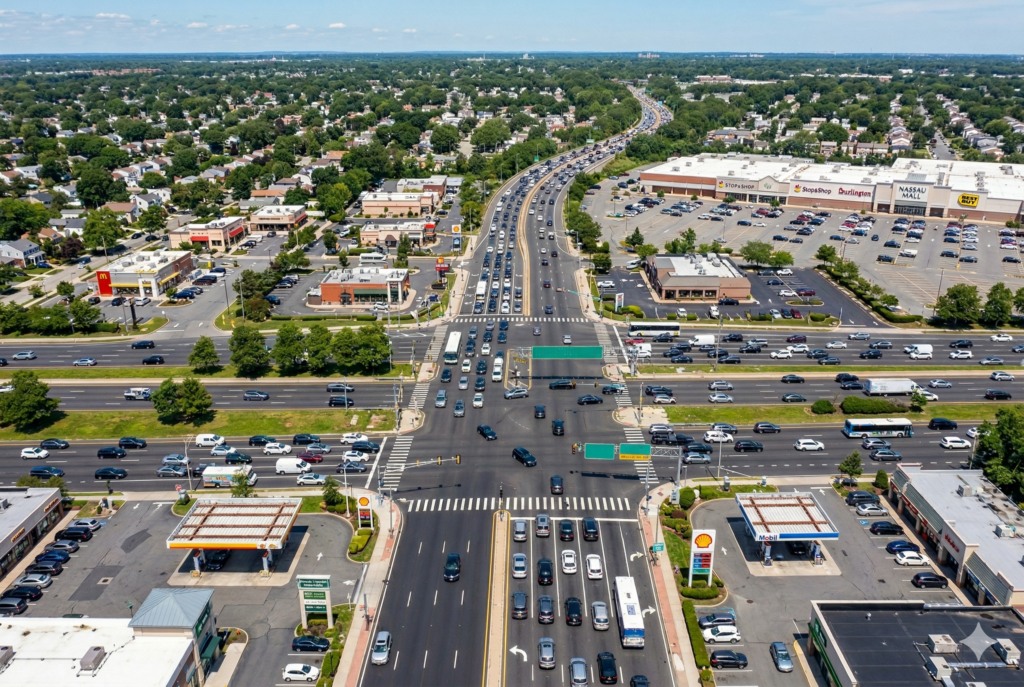
Collision-Prone Roads in Woodbury
Woodbury is a hamlet within the Town of Oyster Bay in Nassau County, located along the Nassau-Suffolk county border. Jericho Turnpike (Route 25) runs east-west through the community as a heavily-trafficked commercial corridor lined with businesses, shopping centers, and driveways that feed directly into traffic. The Seaford-Oyster Bay Expressway (Route 135) passes through Woodbury as a limited-access highway, with its interchange at Jericho Turnpike creating one of the area's most dangerous merge zones. The Long Island Expressway runs just north of Woodbury, adding further traffic volume to local roads that serve as connectors between the two highways. The intersection of Jericho Turnpike, Woodbury Road, and Route 135 has been documented as a notable accident trouble spot, with crashes regularly involving vehicles entering and exiting the expressway at speed while navigating the complex intersection geometry. A six-person injury crash on Jericho Turnpike near Plainview Road and a vehicle rollover crash into the woods near the Route 135 exit are among the documented serious incidents in recent years. Red-light violations are common enough that automated enforcement cameras have been installed at key intersections throughout the area. The combination of high-speed expressway traffic, frequent commercial driveways, and pedestrian activity along Jericho Turnpike's commercial strip creates conditions that produce collisions throughout the day. Long Island recorded 254 traffic deaths in 2022 — 164 in Suffolk County and 81 in Nassau County — the highest combined toll in decades, representing 20% of all statewide fatalities. Traffic deaths across the region increased approximately 40% since 2019. Nassau and Suffolk counties combined average 83 fatal or injury-causing accidents per day. One in three fatal crashes involve speeding, and one in three involve alcohol.
Local Hazard: The Jericho Turnpike and Route 135 interchange in Woodbury is a documented collision hotspot where expressway traffic merges with a signalized commercial corridor. Vehicles exiting Route 135 at speed encounter sudden signal-controlled traffic on Jericho Turnpike, creating dangerous speed differentials that produce rear-end and intersection crashes. Red-light cameras are deployed at multiple Woodbury intersections due to the frequency of red-light violations.
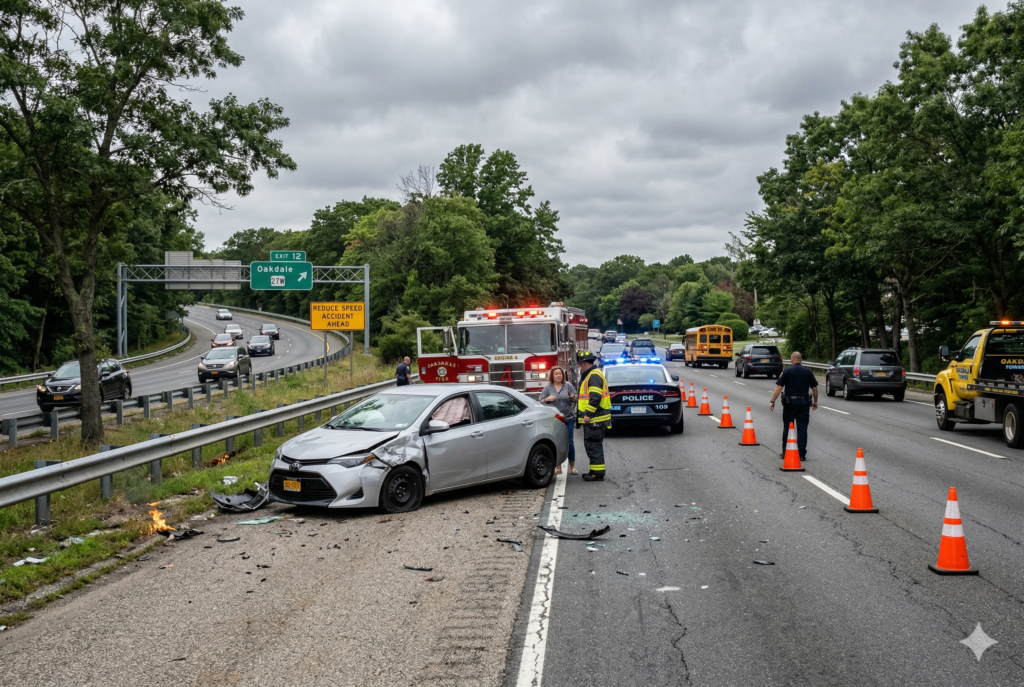
Your No-Fault PIP Benefits After a Crash
New York's no-fault insurance system, codified in Insurance Law § 5102(a), requires all registered vehicles to carry Personal Injury Protection (PIP) coverage. After a car accident in Woodbury, your own auto insurer pays PIP benefits regardless of who was at fault — providing immediate financial support for basic accident-related expenses. PIP benefits cap at $50,000 and cover medical treatment obtained within one year of the crash, lost earnings up to $2,000 monthly for a maximum of three years, and other reasonable expenses at $25 per day for up to one year. You must submit the NF-2 application to your insurer within 30 days of the accident under Insurance Law § 5103. This filing deadline is strictly enforced — late applications are denied regardless of injury severity. The most significant gap in PIP coverage is that it provides no compensation for pain and suffering. A person who sustains a serious spinal injury in a crash at the Jericho Turnpike and Route 135 interchange will receive PIP benefits for their surgery and rehabilitation costs, but those benefits provide nothing for the chronic pain, emotional toll, and diminished quality of life that follow. Recovering non-economic damages requires demonstrating that your injuries meet the serious injury threshold and filing a separate claim against the at-fault driver.Qualifying Under the Serious Injury Standard
To sue for pain and suffering after a car accident in New York, your injuries must fall within at least one of nine "serious injury" categories defined by Insurance Law § 5102(d). This threshold separates cases that can be resolved through PIP benefits from those that warrant a full lawsuit. The nine categories are: death; dismemberment; significant disfigurement; fracture; loss of a fetus; permanent loss of use of a body organ, member, function, or system; permanent consequential limitation of use of a body organ or member; significant limitation of use of a body function or system; and a medically determined injury preventing substantially all of the victim's customary daily activities for at least 90 days during the first 180 days after the accident. Any bone fracture automatically qualifies. The "limitation" categories — which cover many soft tissue injuries including herniated discs, torn ligaments, and chronic pain conditions — require objective medical evidence. MRI findings, quantified range-of-motion deficits, nerve conduction studies, and medical expert opinions must establish that the injury is either permanent or significantly limiting. Insurance companies routinely deploy defense medical examiners to contest these claims, making thorough documentation from the first day of treatment essential to building a successful case.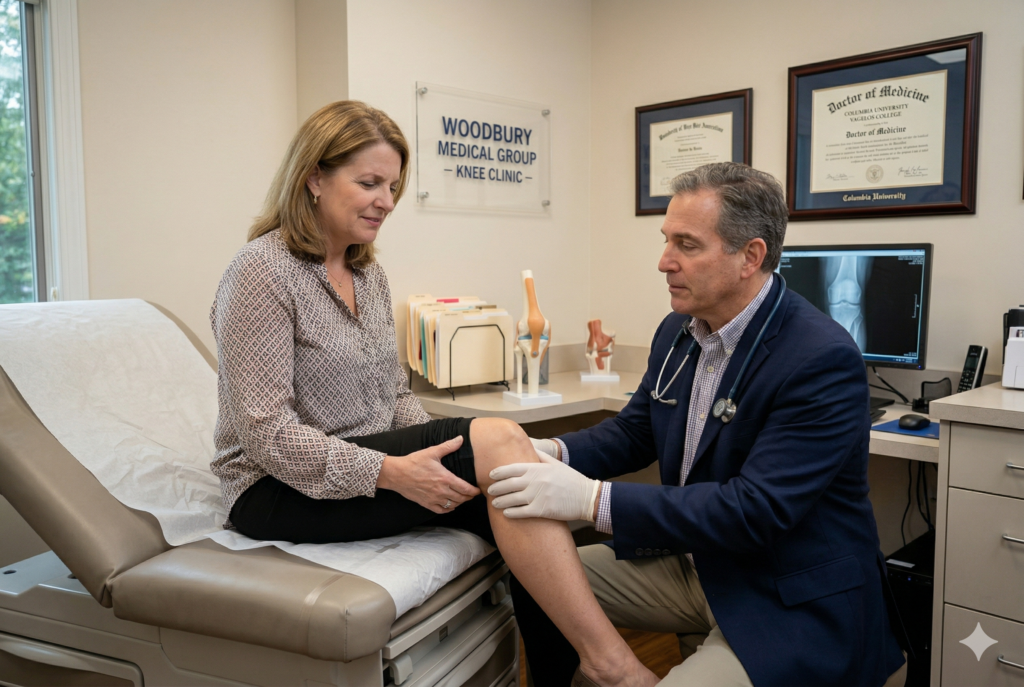
Injuries Linked to Woodbury Car Accidents
Woodbury's collision dynamics — high-speed rear-end crashes where Route 135 traffic meets Jericho Turnpike signals, broadside impacts at commercial intersections, multi-vehicle chain reactions on the LIE — produce a range of serious injuries that require experienced legal representation.Herniated and Bulging Discs
Rear-end collisions along Jericho Turnpike's stop-and-go commercial corridor are a primary cause of disc injuries. The sudden impact compresses vertebral discs, forcing inner material against spinal nerves. Herniated discs produce chronic pain, sciatica, numbness, and weakness that can persist indefinitely. When supported by MRI findings and documented functional limitations, these injuries frequently satisfy the "significant limitation" threshold category.Traumatic Brain Injuries
High-speed collisions on Route 135 and at the LIE interchange generate the violent forces needed to cause traumatic brain injuries — from concussions with temporary cognitive disruption to severe TBIs producing permanent impairment. Brain injuries can result from direct head impacts or from rotational forces that damage neural connections without any visible head wound.Fractures and Broken Bones
Side-impact collisions at Woodbury intersections commonly produce rib, hip, and pelvic fractures. Wrist and forearm fractures result from bracing against the steering wheel or dashboard. Facial bone fractures occur from airbag deployment or contact with vehicle interiors. Every fracture automatically satisfies the serious injury threshold, creating a clear pathway to a pain and suffering claim.Whiplash and Cervical Injuries
The acceleration-deceleration forces in rear-end crashes snap the head forward and backward, straining or tearing cervical muscles, ligaments, and discs. Chronic whiplash produces lasting neck pain, headaches, and limited range of motion. While sometimes dismissed as a minor injury, documented chronic whiplash with objective findings can meet the serious injury threshold.Knee, Shoulder, and Joint Injuries
Dashboard impacts, steering wheel compression, and the twisting forces of a collision tear ligaments and damage cartilage in vulnerable joints. ACL tears, meniscus injuries, rotator cuff tears, and labral injuries typically require arthroscopic surgical repair followed by months of rehabilitation, producing extended work absences and mounting medical expenses.Internal Organ Damage
Blunt trauma to the chest and abdomen from seatbelt compression, steering wheel impact, or side-panel intrusion can rupture the spleen, lacerate the liver, or damage the kidneys. These injuries may present without visible external signs and can become life-threatening if not diagnosed and treated promptly. Same-day emergency evaluation after any significant collision is critical.Spinal Cord Injuries and Paralysis
Catastrophic collisions on Route 135 or the LIE can damage the spinal cord, potentially causing paraplegia or quadriplegia. These injuries require emergency surgical intervention, extended intensive care, and lifelong medical management including wheelchairs, home modifications, and personal care assistance. Lifetime damages in spinal cord injury cases typically reach into the millions.PTSD and Psychological Injuries
Surviving a violent collision can cause post-traumatic stress disorder, driving phobia, anxiety, depression, and insomnia. These psychological injuries are compensable under New York law and may support the 90/180-day threshold category when they prevent the victim from performing substantially all of their usual daily activities. Treatment records from a psychiatrist or psychologist document these conditions.
Holding the Right Parties Accountable
The at-fault driver. Whether the crash resulted from red-light running at a Jericho Turnpike intersection, distracted driving near a commercial plaza, tailgating on Route 135, or speeding through a residential area, the negligent driver can be held liable. Police reports, red-light camera footage, witness statements, and cell phone records help establish the driver's breach of duty. An employer. Woodbury's location between the LIE and major commercial areas generates significant delivery and commercial vehicle traffic. When an employee causes an accident while performing work duties — operating a delivery truck, driving a company vehicle, or providing rideshare services — the employer may be vicariously liable. Commercial policies typically carry $1 million or more in coverage. Vehicle or parts manufacturers. Defective brakes, tires, airbags, or structural components that contribute to a crash or worsen injuries give rise to strict product liability claims. The manufacturer can be held liable without proof of negligence — only that the product was defective and caused harm. Government entities. Woodbury roads are maintained by multiple entities: local roads by the Town of Oyster Bay, Jericho Turnpike by NYSDOT, Route 135 by NYSDOT, and county roads by Nassau County. When defective road conditions — potholes, broken signals, inadequate signage, poor lighting — contribute to a crash, the responsible entity may share liability. Government claims require a Notice of Claim within 90 days under GML § 50-e and a lawsuit within one year and 90 days under GML § 50-i. Alcohol vendors. Under ABC Law § 65, New York's Dram Shop Act, a licensed establishment that serves alcohol to a visibly intoxicated patron who then causes a drunk driving accident may be held liable for the resulting injuries. Vehicle owners. Under the permissive use doctrine, the registered owner of a vehicle can be held liable when the driver they permitted to use the car causes an accident. This creates an additional insurance policy to pursue even if the at-fault driver has minimal coverage.Injured in a Car Accident in Woodbury?
Alonso Krangle LLP represents car accident victims throughout Woodbury and Nassau County. Contact us for a free consultation — you pay nothing unless we recover compensation for you. Call 800-403-6191 for a Free Case ReviewLocal Crash Patterns and New York's Fault-Sharing Rule
Woodbury's crash profile reflects its position as an interchange community. Rear-end collisions dominate along Jericho Turnpike where drivers exiting Route 135 encounter signal-controlled traffic at significantly lower speeds. T-bone crashes occur at the Woodbury Road intersection and at commercial plaza entrances where left-turning vehicles cross multiple lanes. Sideswipe accidents happen on Route 135 during lane changes and merges. Rollover crashes — including documented incidents where vehicles left Jericho Turnpike and entered wooded areas near Route 135 ramps — occur when drivers lose control at speed. New York applies pure comparative negligence under CPLR § 1411. Your compensation is reduced by your share of fault but never eliminated entirely. If total damages are $380,000 and you are found 15% at fault for following too closely, your recovery would be $323,000. This is more favorable than the 50% or 51% bar rules used in many other states, where exceeding a fault threshold would bar recovery completely.
Immediate Steps After a Collision
- Call 911 and wait for police. A police report creates an official record of the crash — documenting scene conditions, driver information, witness identities, and the officer's preliminary observations. This report is critical evidence for your claim.
- Get medical attention on the same day. Visit the emergency room or urgent care immediately, even if you feel only mild discomfort. Many injuries — including TBIs, disc herniations, and internal bleeding — do not produce immediate symptoms. Early medical records link your injuries directly to the accident.
- Photograph the scene thoroughly. Capture vehicle damage from multiple angles, the road surface, traffic signals, intersection layout, skid marks, and visible injuries. In Woodbury's commercial areas, note any surveillance cameras that may have recorded the collision.
- File the NF-2 within 30 days. This application activates your PIP benefits. The deadline is absolute and missing it results in forfeiture of coverage — regardless of how severe your injuries are.
- Do not give the opposing insurer a recorded statement. You have no legal obligation to provide one. Anything you say becomes part of the claim file and can be used to reduce or deny your compensation.
- Consult an attorney before accepting any settlement offer. Early offers are designed to close claims cheaply before the true cost of your injuries is known. An experienced attorney ensures you do not settle for less than your case is worth.
The Compensation You Can Pursue
Economic damages cover your measurable financial losses: medical costs beyond PIP (surgeries, specialist care, rehabilitation, medications, future treatment needs), lost wages, reduced earning capacity, and property damage. In severe injury cases, economic damages may also include home modifications, in-home care, and adaptive equipment. Non-economic damages compensate for the profound personal impact of your injuries. Physical pain and suffering, emotional distress, loss of enjoyment of life, permanent scarring or disfigurement, and loss of consortium are all recoverable. New York places no cap on non-economic damages in personal injury cases — recovery is determined by the facts of the individual case. Punitive damages apply in rare cases of extreme misconduct — severe intoxication, street racing, or deliberately reckless driving. These damages punish the wrongdoer and deter similar conduct. In wrongful death cases, EPTL § 5-4.1 permits recovery of funeral costs, lost financial support, and loss of companionship and guidance. UM/UIM coverage on your own policy can supplement recovery when the at-fault driver's insurance is inadequate.Recognizing Insurance Company Strategies
Presenting lowball offers before your treatment ends. Insurers contact injured people within days of a crash with offers that cover initial bills but ignore future medical needs, long-term pain, and diminished earning potential. Accepting permanently closes your claim. Recording your statements to build a case against you. Adjusters use recorded interviews to capture admissions of fault, minimizing language about symptoms, and inconsistencies that can be cited in claim denials or negotiations. Demanding blanket access to your medical records. Overbroad medical authorizations let insurers search your entire health history for pre-existing conditions to blame for your current symptoms. Attacking gaps in your medical treatment. Any period without documented treatment becomes evidence that your injuries were not serious. Following your doctor's recommended treatment schedule is essential. Using biased defense medical examiners. Insurance companies schedule "independent" exams with doctors who routinely minimize injuries. Your attorney can prepare you and retain independent experts to counter these opinions.
Key Fact: Car accident victims represented by attorneys consistently recover higher compensation than those who negotiate on their own. Insurance companies know this — and they work hardest to settle claims before you have legal representation.
Deadlines for Filing Your Claim
| Action | Deadline | Authority |
|---|---|---|
| Notify insurer / file NF-2 | 30 days | Ins. Law § 5103 |
| Personal injury lawsuit | 3 years | CPLR § 214 |
| Wrongful death lawsuit | 2 years | EPTL § 5-4.1 |
| Notice of Claim (government entity) | 90 days | GML § 50-e |
| Lawsuit against government entity | 1 year + 90 days | GML § 50-i |
| UM/UIM claim | 6 years (contract) | CPLR § 213 |
Government Entity Deadline
If your accident involved a Town of Oyster Bay vehicle, Nassau County equipment, or a hazardous condition on Jericho Turnpike or Route 135 maintained by NYSDOT, you must file a Notice of Claim within just 90 days. This compressed deadline is frequently missed and almost always bars the claim entirely. Contact an attorney immediately.Frequently Asked Questions
I was rear-ended exiting Route 135 onto Jericho Turnpike in Woodbury — who is at fault?
In New York, the driver who rear-ends another vehicle is generally presumed to be at fault, as all drivers have a duty to maintain a safe following distance and remain alert. However, liability can be shared if the lead vehicle stopped abruptly without reason or had non-functioning brake lights. The transition from expressway speed on Route 135 to signalized traffic on Jericho Turnpike catches many drivers off guard. Your attorney can investigate the specific circumstances, including whether the road design or signage contributed to the crash — which could implicate NYSDOT.
What is the serious injury threshold and how do I know if I meet it?
The threshold under Insurance Law § 5102(d) defines nine categories of injury required to sue for pain and suffering. Fractures automatically qualify. For other injuries — herniated discs, torn ligaments, chronic pain — you need objective medical evidence showing significant or permanent limitation. Your attorney and medical providers work together to ensure the documentation meets the legal standard.
What are the deadlines for filing a car accident claim?
The NF-2 for no-fault benefits must be filed within 30 days. Personal injury lawsuits have a three-year statute of limitations (CPLR § 214). Wrongful death claims have two years (EPTL § 5-4.1). Government entity claims require a 90-day Notice of Claim (GML § 50-e) and lawsuit within one year and 90 days (GML § 50-i).
Can I still recover if the other driver was uninsured?
Yes. New York requires all auto policies to include uninsured motorist (UM) coverage. If the at-fault driver has no insurance, you can file a claim against your own UM coverage. If the driver fled the scene (hit-and-run), you must report to police within 24 hours and to the Motor Vehicle Accident Indemnification Corporation (MVAIC) within 90 days. Your attorney can navigate this process and ensure all deadlines are met.
Does being partially at fault reduce my compensation?
Yes, but it does not eliminate it. Under CPLR § 1411, New York reduces your recovery by your percentage of fault but never bars it entirely. Even a plaintiff found 70% at fault can recover 30% of their damages. This pure comparative negligence rule is more favorable to injured parties than the rules in many other states.
How much does Alonso Krangle LLP charge for a car accident case?
Nothing upfront. We work on a contingency fee basis — you pay no legal fees or costs unless we successfully recover compensation for you. Your initial consultation is free.
What if a red-light camera captured the other driver running a red light?
Red-light camera footage can be valuable evidence, but it must be obtained quickly before it is overwritten. Your attorney can subpoena the footage from the municipality operating the camera system. A red-light violation is strong evidence of negligence and can significantly strengthen your case. However, red-light camera tickets themselves are treated as civil violations in New York and do not create a criminal record for the driver.
What if the other driver was working for a delivery company?
When a crash is caused by a driver performing work duties, their employer can be held vicariously liable under respondeat superior. This is important because commercial vehicle insurance policies typically carry coverage limits of $1 million or more — far exceeding the $25,000/$50,000 minimum on personal auto policies. This applies to truck drivers, delivery workers, rideshare drivers on active trips, and employees using company vehicles.
I don't have health insurance — can I still get medical treatment after an accident?
Yes. Your PIP benefits cover the first $50,000 in medical expenses regardless of health insurance status. If PIP is exhausted, many medical providers will treat car accident patients on a lien basis, meaning they defer payment until your personal injury case resolves. Your attorney can connect you with providers willing to work on this basis so you receive necessary treatment without upfront costs.
Related Resources
Speak with An Attorney
Submit This Form or Call 800-403-6191