

Greenlawn
Greenlawn is a residential hamlet within the Town of Huntington where Broadway, Pulaski Road, and the connector routes linking Huntington village to Centerport and Northport funnel traffic through a community that was not designed for modern volumes. The LIRR Greenlawn station, local school zones, and narrow residential roads compound the collision risks created by through-traffic. Alonso Krangle LLP represents Greenlawn car accident victims, pursuing full compensation for injuries caused by driver negligence on these roads.
Accident Risks on Greenlawn Roads
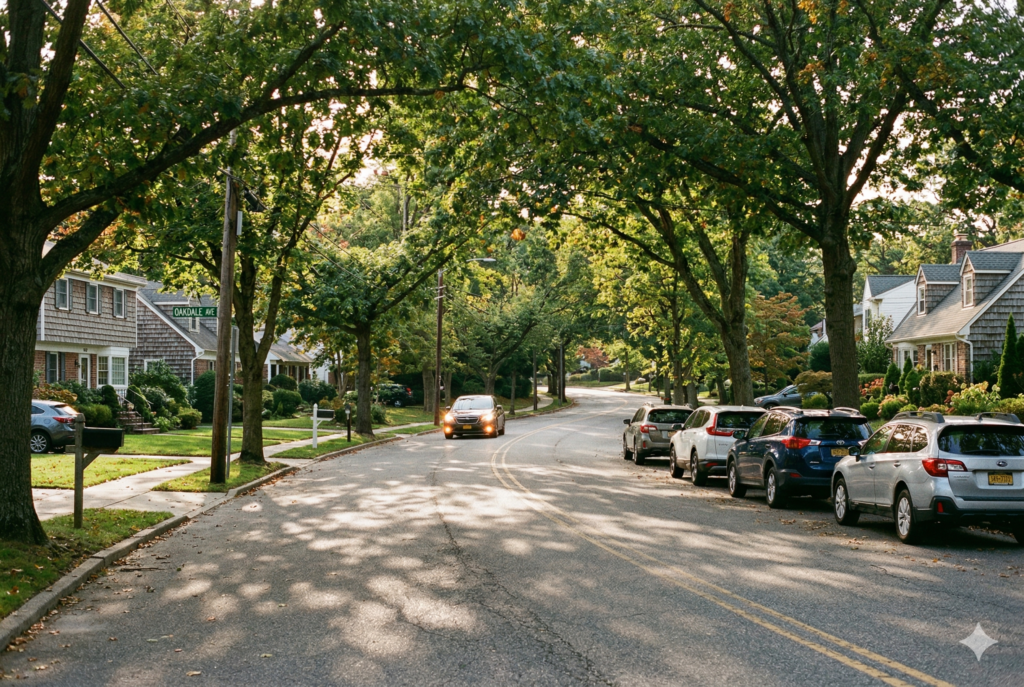
Greenlawn is an unincorporated hamlet within the Town of Huntington in Suffolk County, situated between Huntington village to the west and Centerport to the northeast. Broadway runs north-south through the community, serving as the primary local through-route and connecting to Route 25A (Fort Salonga Road) to the north. Pulaski Road cuts through the area with documented poor visibility around curves and is especially hazardous during wet and icy conditions. Cuba Hill Road, Manor Road, and Boulevard Avenue carry additional residential and commuter traffic through the hamlet's narrow, tree-lined streets. The Greenlawn LIRR station on Broadway generates concentrated traffic during morning and evening rush hours as commuters arrive and depart. The mix of vehicles jockeying for parking, pedestrians crossing Broadway to reach the platform, and through-traffic trying to pass creates a conflict zone that produces rear-end collisions and pedestrian accidents. Broadway's speed transitions — from higher-speed sections near the hamlet's periphery to lower-speed residential blocks near the station and schools — catch unfamiliar drivers off guard. Pulaski Road's curves and limited sightlines make it a recurring location for loss-of-control and head-on crashes, particularly during fall when wet leaves reduce traction and during winter ice events. Suffolk County recorded 164 traffic deaths in 2022, more than any other county in New York State. Traffic fatalities across Long Island have risen approximately 40% since 2019. One in three fatal crashes involve speeding, and one in three involve alcohol. Even in quieter residential communities like Greenlawn, these risk factors are present — and the narrower roads and limited sight lines amplify their danger.
Local Hazard: Pulaski Road through the Greenlawn and Huntington Station area has documented poor visibility around its curves and becomes especially dangerous during rain, snow, and fall leaf conditions. Community residents have identified this corridor as needing traffic-calming measures, and it is included in a proposed $10 million safety improvement initiative for the Route 110/Pulaski Road area.
No-Fault Coverage: What You Get and What's Missing
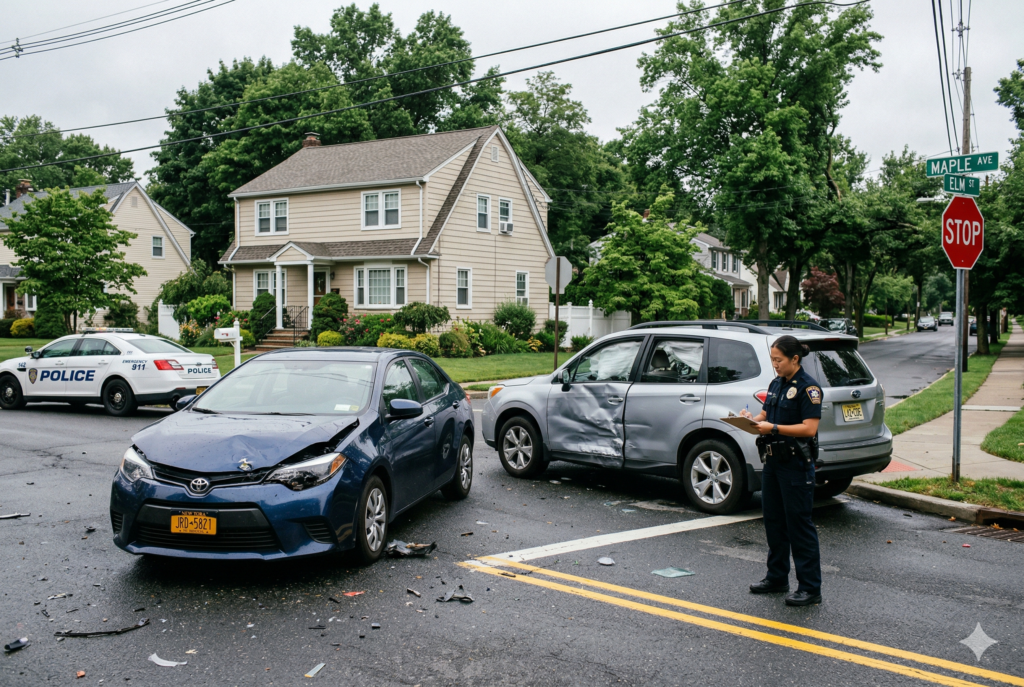
Under Insurance Law § 5102(a), every vehicle registered in New York carries Personal Injury Protection (PIP) coverage. After a car accident in Greenlawn, your own auto insurer pays your PIP benefits regardless of who was at fault. This system provides immediate support for basic expenses while fault is determined. PIP pays up to $50,000 total: medical treatment within one year of the accident, lost wages up to $2,000 per month for three years, and miscellaneous expenses at $25 per day for one year. The NF-2 application must be filed with your insurer within 30 days of the crash under Insurance Law § 5103. Missing this deadline forfeits your right to benefits. PIP provides zero compensation for pain and suffering, emotional distress, or loss of enjoyment of life. A driver who suffers a fractured collarbone after being hit by a vehicle running a stop sign on a Greenlawn residential street will receive PIP coverage for their medical care and lost wages — but nothing for the months of pain, the inability to hold their child, or the disruption to every aspect of their daily routine. To recover non-economic damages, your injuries must meet the serious injury threshold, and you must pursue a separate claim against the at-fault driver.When Your Injury Qualifies as Serious Under New York Law
Insurance Law § 5102(d) defines nine categories of "serious injury" that must be met before a car accident victim can sue for pain and suffering in New York. This gatekeeping threshold exists because the no-fault system was designed to handle minor claims through PIP benefits, reserving lawsuits for injuries of genuine severity. The nine categories include: death; dismemberment; significant disfigurement; fracture; loss of a fetus; permanent loss of use of a body organ, member, function, or system; permanent consequential limitation of use of a body organ or member; significant limitation of use of a body function or system; and a medically determined injury preventing the victim from performing substantially all of their customary daily activities for 90 of the first 180 days following the accident. Fractures automatically qualify. For injuries falling within the "limitation" categories — herniated discs, torn ligaments, chronic pain syndromes — you need MRI or CT imaging, quantified range-of-motion testing, nerve conduction studies, and medical expert opinions that connect the injury to the accident and establish its permanent or significant character. Insurance companies deploy defense medical examiners to challenge these claims. Comprehensive, consistent medical documentation from the very first day of treatment is the strongest protection against these challenges.
Injuries Our Firm Handles in Greenlawn Accident Cases
Greenlawn's collision dynamics — head-on crashes on Pulaski Road's curves, rear-end impacts near the LIRR station, T-bone collisions at residential intersections, pedestrian strikes on Broadway — produce injuries requiring experienced legal representation.Traumatic Brain Injuries
Head-on collisions on Pulaski Road and single-vehicle crashes into trees and poles generate the forces needed to cause TBIs. Even moderate-speed impacts on residential streets can produce concussions with lasting cognitive effects — memory problems, difficulty concentrating, mood changes, and headaches that persist for months. Severe TBIs may cause permanent impairment requiring lifelong cognitive therapy.Fractures and Broken Bones
Side-impact crashes at Greenlawn intersections commonly fracture ribs, hips, and pelvic bones. Pedestrians struck near the LIRR station sustain leg and ankle fractures from the direct impact. Complex fractures requiring surgical fixation with pins, plates, or rods involve extended recovery periods. Any fracture automatically meets the serious injury threshold under New York law.Herniated and Bulging Discs
Rear-end collisions near the Greenlawn LIRR station and along Broadway compress spinal discs, forcing them against adjacent nerves. Herniated discs produce chronic back or neck pain, radiating symptoms, numbness, and weakness that may persist for years and can require surgery. Properly documented disc injuries with measurable functional limitations frequently meet the "significant limitation" threshold.Whiplash and Cervical Injuries
Stop-and-go traffic near the train station makes rear-end crashes a regular event, and whiplash is the most frequent resulting injury. Chronic whiplash produces lasting neck pain, stiffness, headaches, and restricted range of motion. While often dismissed as minor, documented chronic whiplash with objective findings can meet the serious injury threshold.Torn Ligaments and Soft Tissue Injuries
The twisting and impact forces of a collision tear knee ligaments (ACL, MCL, meniscus), shoulder structures (rotator cuff), and hip cartilage (labrum). These injuries typically require arthroscopic surgery and months of rehabilitation. The prolonged recovery generates substantial medical expenses and extended inability to work.Internal Organ Damage
Blunt force trauma from steering wheel impacts, seatbelt compression, and side-panel intrusion can damage internal organs. Ruptured spleens, liver lacerations, and kidney contusions are potentially life-threatening injuries that may not present visible external symptoms. Prompt emergency medical evaluation after any significant collision is critical.Burns and Disfigurement
Vehicle fires after collisions, airbag chemical burns, and facial lacerations from shattered windshield glass can cause serious burns and permanent scarring. Significant disfigurement is an independent category of serious injury under New York law, allowing recovery for pain and suffering regardless of whether the disfigurement causes functional limitation.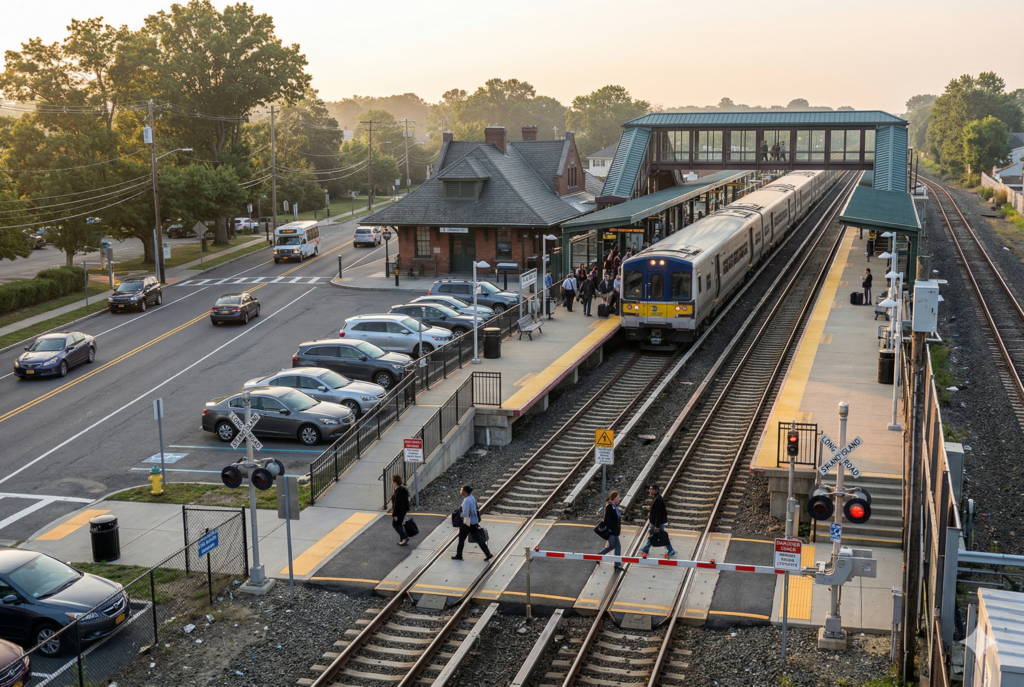
Who May Be Liable for Your Accident
The at-fault driver. A driver who speeds through Greenlawn's residential streets, fails to stop at a stop sign, runs a red light at Broadway, tailgates in commuter traffic near the LIRR station, or drives distracted can be held liable for your injuries. Police reports, witness testimony, cell phone records showing distraction, and any available surveillance footage help establish negligence. An employer. When a crash involves a delivery driver, commercial vehicle operator, or any employee on work duties, the employer may be vicariously liable under respondeat superior. Commercial insurance policies typically provide $1 million or more in coverage, offering substantially greater compensation potential than personal auto policies. Vehicle manufacturers. Defective brakes, tires, airbags, or structural components that cause or worsen a crash give rise to strict product liability claims against the manufacturer. No proof of negligence is required. Government entities. The Town of Huntington maintains local Greenlawn roads including Broadway and Pulaski Road. NYSDOT maintains state routes in the surrounding area. Suffolk County maintains county roads. When road defects — potholes, missing stop signs, poor drainage, inadequate curve warnings — contribute to a crash, the responsible entity may share liability. Government claims require a Notice of Claim within 90 days under GML § 50-e and a lawsuit within one year and 90 days under GML § 50-i. Alcohol vendors. Under ABC Law § 65, licensed establishments that serve alcohol to visibly intoxicated patrons who then cause crashes can be held liable for resulting injuries. Vehicle owners. New York's permissive use doctrine holds vehicle owners liable when they allow another person to drive their car and that person causes an accident.Injured in a Car Accident in Greenlawn?
Alonso Krangle LLP represents Greenlawn accident victims throughout the Town of Huntington. Free consultations — you pay nothing unless we recover compensation for you. Call 800-403-6191 for Your Free Consultation
Greenlawn Crash Patterns and Comparative Fault
Greenlawn's crash profile reflects its residential and commuter character. Rear-end collisions occur near the LIRR station during peak hours when stop-and-go traffic catches inattentive drivers. Head-on crashes happen on Pulaski Road's curves when drivers cross the centerline on slippery or leaf-covered pavement. T-bone collisions at residential intersections result from stop-sign violations on side streets. Pedestrian accidents occur on Broadway near the LIRR station and in school zones. Single-vehicle crashes into trees and utility poles happen on Greenlawn's narrow, tree-lined roads, especially during rain and low-visibility conditions. Under CPLR § 1411, New York applies pure comparative negligence. If a jury determines total damages of $340,000 and assigns you 20% fault for traveling slightly above the posted speed, your recovery would be $272,000. New York's rule ensures that partial fault reduces — but never eliminates — your right to recover. This is considerably more favorable than the modified comparative negligence rules in states that bar recovery once fault exceeds 50% or 51%.What to Do in the Hours After a Crash
- Call 911 for police and emergency services. The Suffolk County Police Department responds to crashes in Greenlawn. A police report documenting the scene, drivers, and witnesses is critical evidence.
- Get medical attention on the day of the accident. Visit the emergency room or urgent care immediately. Injuries including concussions, disc herniations, and internal bleeding commonly present with delayed symptoms. Same-day medical records link your injuries directly to the crash.
- Document the scene with photographs. Capture vehicle damage, road surface conditions (especially on Pulaski Road where surface conditions are a factor), traffic controls, skid marks, and visible injuries.
- File the NF-2 within 30 days. Submit the no-fault application to your insurer promptly. This absolute deadline triggers your PIP benefits — late filings are denied regardless of injury severity.
- Do not provide the opposing insurer a recorded statement. You have no legal obligation to do so, and statements made without legal counsel are routinely used to diminish your claim's value.
- Contact a car accident attorney before accepting any offer. Early settlement offers are designed to close your claim cheaply. An experienced attorney evaluates the full extent of your damages before advising whether an offer is fair.
The Damages You Can Recover
Economic damages cover every measurable financial loss: medical expenses beyond PIP coverage, lost wages, diminished future earning capacity, and property damage to your vehicle. In severe cases, economic damages include future medical projections, home modifications, and long-term care costs. Non-economic damages address the human cost of your injuries. Physical pain and suffering, emotional distress, loss of enjoyment of life, permanent disfigurement, and loss of consortium (the impact on your spousal relationship) are all compensable. New York has no cap on non-economic damages in personal injury cases. Punitive damages apply in rare cases of extreme misconduct — severely intoxicated driving, street racing, or willful recklessness. In wrongful death cases, EPTL § 5-4.1 permits recovery of funeral costs, lost financial support, and loss of companionship and guidance. UM/UIM coverage on your own policy supplements recovery when the at-fault driver's insurance is inadequate.Insurer Tactics That Reduce Your Recovery
Quick, lowball settlement offers. The at-fault driver's insurer may present a settlement within days of the crash, calculated to close your claim before the full extent of your injuries becomes clear. Accepting permanently waives all further claims. Recorded statements used as claim-reduction tools. Every word in a recorded interview becomes ammunition. Adjusters ask leading questions to elicit admissions, minimizing language, and inconsistencies with medical records. Medical history fishing expeditions. Broad medical authorizations let insurers search decades of records for pre-existing conditions to blame for your current symptoms. Treatment gap arguments. Missing appointments or delaying follow-ups gives insurers documented grounds to argue your injuries were not serious. Biased defense medical examinations. Doctors hired by insurers frequently produce reports minimizing injuries. Your attorney can prepare you and retain independent experts to counter these findings.
Key Fact: Accident victims represented by experienced attorneys consistently recover higher compensation than those who negotiate with insurers alone. Alonso Krangle LLP's Melville office is nearby, allowing us to investigate Greenlawn accidents quickly and preserve critical evidence.
Deadlines That Control Your Case
| Action | Deadline | Authority |
|---|---|---|
| Notify insurer / file NF-2 | 30 days | Ins. Law § 5103 |
| Personal injury lawsuit | 3 years | CPLR § 214 |
| Wrongful death lawsuit | 2 years | EPTL § 5-4.1 |
| Notice of Claim (government entity) | 90 days | GML § 50-e |
| Lawsuit against government entity | 1 year + 90 days | GML § 50-i |
| UM/UIM claim | 6 years (contract) | CPLR § 213 |
Government Entity Deadline Warning
If your accident involved a Town of Huntington vehicle, Suffolk County equipment, or a hazardous condition on a road maintained by the town, county, or NYSDOT, you must file a Notice of Claim within just 90 days. This compressed deadline is among the shortest in New York personal injury law. Missing it almost always permanently bars your claim.Frequently Asked Questions
I was hit by a car while crossing Broadway near the Greenlawn LIRR station — what are my rights?
Pedestrians struck by vehicles in New York can pursue claims for all damages — medical bills, lost wages, pain and suffering — without meeting the serious injury threshold that applies to vehicle occupants. The driver who struck you may be liable for negligence, and if poor crosswalk design, inadequate lighting, or obstructed sight lines contributed to the accident, the Town of Huntington or other government entities may share liability. Government claims require a 90-day Notice of Claim. Contact an attorney immediately to protect your rights.
What is the serious injury threshold?
Under Insurance Law § 5102(d), you must demonstrate your injury falls within one of nine categories to sue for pain and suffering. These include fracture, dismemberment, significant disfigurement, permanent loss or limitation of use, and a medically determined injury preventing substantially all daily activities for 90 of 180 days. Fractures auto-qualify. Other injuries require medical documentation showing measurable functional impairment.
How long do I have to file a car accident claim?
NF-2: 30 days. Personal injury lawsuit: 3 years (CPLR § 214). Wrongful death: 2 years (EPTL § 5-4.1). Government entity Notice of Claim: 90 days (GML § 50-e). Government lawsuit: 1 year + 90 days (GML § 50-i).
Can I recover if I was partially at fault?
Yes. CPLR § 1411 allows recovery at any fault level under pure comparative negligence. Your award is reduced by your percentage of fault but never eliminated entirely.
What does Alonso Krangle LLP charge?
Nothing upfront. Contingency fee basis — you pay no fees or costs unless we recover compensation for you. The initial consultation is free.
I lost control on Pulaski Road on wet leaves and hit another vehicle — can I still pursue a claim?
Potentially, yes. If the road's design, maintenance, or lack of adequate warning signs contributed to the hazardous conditions, the Town of Huntington or other government entity responsible for the road may share liability. Under comparative negligence, even if you bear partial fault for speed or inattention, you can still recover — with your compensation reduced by your percentage of responsibility. A government claim requires a Notice of Claim within 90 days.
What if the other driver fled the scene?
In a hit-and-run, if the at-fault driver cannot be identified, you can file a claim against your own uninsured motorist (UM) coverage. All New York auto policies are required to include UM coverage. You must report the incident to police within 24 hours and to the Motor Vehicle Accident Indemnification Corporation (MVAIC) within 90 days to preserve your rights.
What compensation is available in a car accident case?
If you meet the serious injury threshold, you can pursue economic damages (medical costs beyond PIP, lost wages, diminished earning capacity, property damage), non-economic damages (pain and suffering, emotional distress, loss of enjoyment of life, disfigurement, loss of consortium), and in rare extreme cases, punitive damages. New York has no cap on non-economic damages.
Can I choose my own doctor after an accident?
Yes. New York's no-fault system grants you the right to select your own treating physician. You are not required to use any doctor recommended by an insurance company. Choosing a doctor experienced in accident injury treatment and familiar with documentation requirements for legal claims strengthens both your recovery and your case.
Related Resources
Speak with An Attorney
Submit This Form or Call 800-403-6191